|
 |
 | | | | | | ||||||||||||||||||||||||||||||||||||||||||||||||||||||||||||||||||||||||||||||||||||||||
| | | You are in: UK | ||||||||||||||||||||||||||||||||||||||||||||||||||||||||||||||||||||||||||||||||||||||||||
|
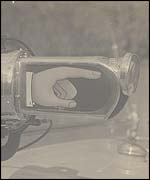
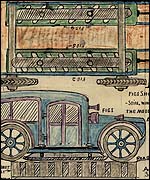
| | Wednesday, 19 June, 2002, 11:52 GMT 12:52 UK Inventions proved a driving force An early proposal for a pedestrian crossing Traffic safety has always taxed the brains of transport civil servants who, as files from the Public Record Office reveal, were often open to the weirdest of suggestions. As far back as 1938 a certain County Durham inventor came up with a crude method of stopping cars to protect pedestrians - which may have been a forerunner to today's road crossings. Another device - to be used as a car indicator - showed a hand with a finger pointing the way the vehicle was about to turn.
These invention ideas, together with other colourful prototypes, were carefully filed and stored in the vaults of the Ministry of Transport. The files, released on Wednesday by the record office in Kew, west London, show that all possibilities were considered to cut accident rates. Among them was a vision of a road safety system, by a Mr Beck of South Shields, which would have involved installing a set of giant electro-magnets under the road. The creator suggested that any car trying to drive over his pedestrian crossing while people were on it, would be brought to a grinding halt by the powerful magnets. Mr Beck said steel skids would need to be attached to vehicles so that they could be stopped by the magnetic "ground-tables". 'Accidental' find He suggested his system of magnets would "defy any sort of weather, they are shock-proof and harmless". In 1919, when drivers commonly used hand signals to indicate they were turning, the Ministry of Transport was keen to find a basic alternative.
One submitted plan proposed attaching a clumsy contraption to the side of the car, depicting an image of a hand with one finger pointing the way. There was also a suggestion for a dust preventer which looked like a tin can punctured with holes and anti-mud splash devices which resembled giant bicycle mudguards. Rather than being binned as daft, these suggestions were carefully stored away by civil servants in the department's archives. David Humphries, publicity officer for the public record office, said they were all uncovered by accident as he went through the files, ahead of publication. Online archive "They were amongst hundreds of pretty dull files and pictures of buses and cars and were just found by chance," he said. "They were all kept by the ministry and do suggest it was open to a wealth of suggestions."
Odd though his invention may seem, Mr Beck was obviously an inventor to watch - he also provided an alternative proposal remarkably similar to a modern pelican crossing. The public record office hopes to provide online access to the files by the end of the week under the new releases section of its website. | | See also:  18 Jun 02 | UK Politics 16 Apr 02 | UK 07 Feb 02 | Asia-Pacific 01 Jan 01 | UK Confidential Internet links: The BBC is not responsible for the content of external internet sites Top UK stories now: Links to more UK stories are at the foot of the page. | ||||||||||||||||||||||||||||||||||||||||||||||||||||||||||||||||||||||||||||||||||||||||
| |
|  E-mail this story to a friend E-mail this story to a friend |
| |
| Links to more UK stories |
| | | ||
 | ||||
 | | Back to top
| ||
| ---------------------------------------------------------------------------------- To BBC Sport>> | To BBC Weather>> | To BBC World Service>> ---------------------------------------------------------------------------------- © MMIII | News Sources | Privacy |