
|
 |
 | | | | | |||||||||||||||||||||||||||||||
| | You are in: UK | |||||||||||||||||||||||||||||||||
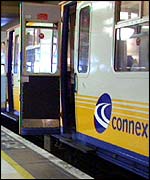
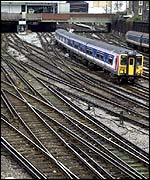
 | | Monday, 18 March, 2002, 14:22 GMT When old trains are better than new 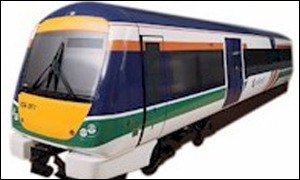 Scotrail has been unhappy with its new Turbostar trains Despite the introduction of new rolling stock, delays have worsened on Britain's tired rail network. It seems plush, new trains are not the fix that passengers have been hoping for. A trip to Dover Priory station on England's south coast can be a frustrating experience, and not just because of the delays one might encounter on the journey. As the train ambles through Ashford, passengers in 40-year-old slam door carriages can glimpse Connex's fleet of sparkling new rolling stock - stranded in the depot sidings.
But it is still a far cry from the sleek future promised by privatisation. So where are all the plush new trains? Like the Connex carriages at Ashford, much of the fresh stock is sitting untouched and idle. Ironically, putting it into service might create more problems than it would solve. Performance risk The trouble is that new trains have teething problems. And at a time when rail operators are trying desperately to claw back their pre-Hatfield performance figures, this sort of rolling stock is just a liability.
Many are undergoing technical modifications, says a company spokeswoman. Other examples include:
For those passengers eagerly awaiting cleaner, more comfortable trains, the unhappy truth is that the older models are more reliable, says James Abbott, editor of Modern Railways. Reliability curve "The reliability of a train is rather like a bathtub curve. When it's new it has lots of problems because no one is familiar with how it works," says Mr Abbott.
Issues such as track gauge and platform width, mean trains must be tailored to a particular network. Good lines of communication are needed between the network owner - Railtrack - and individual train manufacturers such as Alstom and Adtranz. Teething troubles of this sort are not unique to the UK. But a complicating factor here is the procedure for safety clearance of new trains, says Mr Abbott, Cleared for safety "In place of British Rail, you now have a contractual matrix of lots of different companies and they are all trying to cover their own backs. It means that everyone now has a good reason not to sign something off." And then there is the fact that with old trains there is simply less that can go wrong. "With the slam doors you've got the bog-standard electric traction motor that is based on tried and tested 80-year-old technology. You've got slam doors, toilets that dump contents on the track. There's nothing much to it. "Now that the new models have retention toilets, electric doors, electric passenger information, the scope for something going wrong is much wider." | |
See also:  Internet links: The BBC is not responsible for the content of external internet sites Top UK stories now:  Links to more UK stories are at the foot of the page. | |||||||||||||||||||||||||||||||
|
Links to more UK stories |
 | | ^^ Back to top News Front Page | World | UK | UK Politics | Business | Sci/Tech | Health | Education | Entertainment | Talking Point | In Depth | AudioVideo ---------------------------------------------------------------------------------- To BBC Sport>> | To BBC Weather>> ---------------------------------------------------------------------------------- © MMIII|News Sources|Privacy  |




 E-mail this story to a friend