
|
 |
 | | | | | ||||||||||||||||||||||||
| | You are in: UK | ||||||||||||||||||||||||||
 | | Friday, 8 March, 2002, 13:04 GMT Why holiday can be a lifesaver 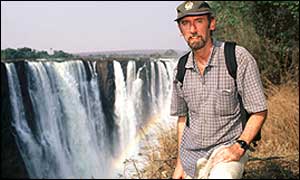 One-time workaholic Joe Robinson takes a break The British may have the longest working week in Europe, but that's nothing compared to the US. Maggie Shiels tells how holiday deprivation can get to be a deadly "illness". Britain's long work hours culture has been described as a national disgrace while in Japan death by over work, or Karoshi, is said to be commonplace. Now in America, campaigners decrying the 24/7 labour ethic claim it's resulting in a nation of employees suffering from something called "vacation deficit disorder".
"Small business employees, the majority of us, get an average of 8-13 days off a year while Europeans and Australians receive four to six weeks paid leave. In total hours, we now work two months longer every year than the Germans and two weeks longer than the Japanese." Mr Robinson, who is writing a book on the subject, is leading the charge to persuade government to implement a "cure" for vacation deficit disorder. Reasonable request At meetings with leading members of Congress in Washington next month he will call for the Fair Labour Standards Act to be changed to allow an increase in the amount of annual leave people get. His demands are modest compared with what employees in most of the rest of the world already get.
But this isn't just about giving Americans more time in the sun. Numerous studies show there is a direct link between time off and a reduced risk of death. One such survey by State University of New York found regular vacations lowered the risk of death by almost 20% among men aged 35 to 57. In women aged 45 to 64 the death risk was halved. The symptoms Pamela Ammondson, an author who teaches workshops about taking time out from work, says she has seen her fair share of burnt out clients.
She also maintains that the "work hard philosophy" has led to countless problems with depression, fatigue, stomach problems, over-eating, under-eating, increased drinking, smoking and dampened sex drive. The irony is that while Mr Robinson is campaigning for an increase in annual leave, many workers don't even take the small holiday allocation they have. One in six are too busy to actually use up all their vacation allowance, according to a survey by Oxford Health Plans Inc. And rather than liberating us, technology chains people to their work, says Jill Andresky Fraser, author of White-Collar Sweatshop: The Deterioration of Work and Its Rewards in Corporate America. 'Relax, but how?' "Although we thought technology would make our work lives easier and more creative, the real impact of our laptops, our Palm Pilots, our e-mail and our cell phones is that we can't ever not work. There's no justification," she says.
"We get into this absurd situation where enjoyment, which is what we are doing all this for, makes us feel bad. People simply can't switch off because they think even in their downtime they have to be doing something, they have to be productive otherwise that time is worthless and so are they." Alongside vacation deficit disorder, Mr Robinson also lifts the lid on what he calls the nation's "overwork culture" which has been exacerbated by the present gloomy economic conditions. In fear of the boot Ms Ammondson agrees. "There are a lot of people now who are really, really worried and they're working just to save their jobs. Add to that the work that's dumped on the remaining employees after downsizing and you have a lot of overstressed workers."
"We are really in competition to see who can live less of a life than the next guy because the whole thing is based on who can take more." Mr Robinson says he's seeing people re-assess their lives and that the attacks of 11 September, known as 9/11 in America, has played a part in that sea change. "It's been building for a while and I think people are finding that after working 60-hour weeks for 10-15 years they're miserable. So I think 9/11 was an additional wake up call that there are other things in life besides work." | | See also:  Internet links: The BBC is not responsible for the content of external internet sites Top UK stories now:  Links to more UK stories are at the foot of the page. | ||||||||||||||||||||||||
|
Links to more UK stories |
 | | ^^ Back to top News Front Page | World | UK | UK Politics | Business | Sci/Tech | Health | Education | Entertainment | Talking Point | In Depth | AudioVideo ---------------------------------------------------------------------------------- To BBC Sport>> | To BBC Weather>> ---------------------------------------------------------------------------------- © MMIII|News Sources|Privacy  |







 E-mail this story to a friend