
|
 |
 | | | | | |||||||||||||||||||||||||
| | You are in: UK | |||||||||||||||||||||||||||
 | | Thursday, 21 February, 2002, 15:14 GMT Panic on the streets? 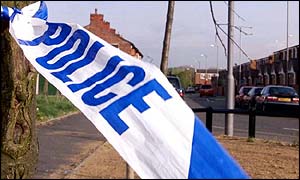 Crime figures are falling. But a spate of violent offences has raised fears of a crime wave. BBC News Online's Jonathan Duffy asks if merely fearing crime makes one a victim? True or false: Britain is in the grip of a crime wave? A cool-headed rationalist would probably answer "false". If however, you've glanced at Thursday's copy of the Mirror, you might take the opposite view.
Across four inside pages, the paper catalogues violent crimes from the four corners of the United Kingdom. Among the most sadistic are:
Such chilling stories come in the wake of several other attacks and murders which have hit the news stands since the New Year.
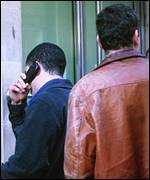
So it will surprise some people that on average, we are less likely to be victims of crime than a few years ago. Crime levels in the UK are falling, and quite significantly. According to last year's British Crime Survey, overall there was a 12% drop in crime between 1999 and 2000. Burglaries fell by 17%, vehicle related theft by 11%, household theft by 16% and violent crime by 19%. Yet the full picture tells a different story. Phone muggings While violent crime of all types is down, street crime is actually on the rise, many of which involve mobile phones. Some 700,000 mobile phones were stolen last year, many in street muggings.
Firearms crime is also on the increase - in London the number of shootings has almost doubled since 1995. The "London factor" could be key to the debate about fear of crime. After all, any violent offence in London is on the doorstep of the national media and therefore likely to receive more coverage. Middle class victims Who is the victim could be another factor. As BBC News Online reader Matthew Wood suggested in a Talking Point debate last month, "crimes are now being committed in more affluent areas... making the crimes more visible".
No, says Dr Bere Mahoney, a psychologist and "fear of crime" expert, who says simply fearing crime is enough to make you a victim of crime. "In academic literature we try to distinguish between direct victims of crime - those who have experienced a crime - and indirect victims - those who know someone who has been a direct victim or by extension know of a crime because of media reports. Facing fear "If the media report even the small number of cases, readers may see themselves as being indirect victims."
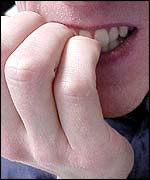
The psychological effect on these "secondary" victims is, obviously, not as serious as frontline victims. Nevertheless, they can affect one's wellbeing and cause heightened anxiety, she says. "Humans are quite bad about making rational decisions based on facts and figures - we tend to let hearsay overshadow hard evidence. We often overlook or override such facts when we gauge the probability of something happening to us." | | See also:  Internet links: The BBC is not responsible for the content of external internet sites Top UK stories now:  Links to more UK stories are at the foot of the page. | |||||||||||||||||||||||||
|
Links to more UK stories |
 | | ^^ Back to top News Front Page | World | UK | UK Politics | Business | Sci/Tech | Health | Education | Entertainment | Talking Point | In Depth | AudioVideo ---------------------------------------------------------------------------------- To BBC Sport>> | To BBC Weather>> ---------------------------------------------------------------------------------- © MMIII|News Sources|Privacy  |





 E-mail this story to a friend