|
 |
 | | | | | | ||||||||||||||||||||||||||||||||||||||||||||||||||||||||||||||||||||||||||||||||||||||||||||||||||||||||||||||||||||||||||||||||||||||||||||||||
| | | You are in: Technology | ||||||||||||||||||||||||||||||||||||||||||||||||||||||||||||||||||||||||||||||||||||||||||||||||||||||||||||||||||||||||||||||||||||||||||||||||||
|
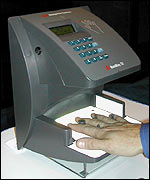
| | Thursday, 23 January, 2003, 08:47 GMT Faces and eyes rival passwords  Fingerprint scanners already used in keyboards
This is the message from the US military, which has a special team devoted to testing out the latest biometric systems. "The technology is really maturing," said Gregory Johnson, technology spokesman for the Department of Defense's Biometrics Management Office (BMO). "The stuff that is on the market is here and now and reliable. Now it's becoming widespread." But he admitted that biometric systems could be beaten and so would be used in combination with other security systems like a swipe card and a PIN number. Need for security The BMO was set up two years ago to test and evaluate biometric technology developed by commercial companies.
With a budget of $33.1m in 2002 and an expected budget of $41m this year, the BMO is at the heart of US military interest in biometrics. "There is a need for greater security for DoD activities, whether it is physical access to a building, logging onto computer networks or to know who is getting on an airplane," Mr Johnson told BBC News Online. "What we want to do is know that we have the right person in the right place doing the right thing." Rival systems Biometrics is a nascent industry, which analysts say is worth between $240m to $400m. Rival technologies are vying for lucrative government contracts.
One other technology attracting interest is signature recognition. This works by looking at how you write your name, not what it looks like when you are done. The BMO's job is to look at all the commercially available technology and make recommendations to the US military. "Biometrics will enable Department of Defense users to be identified as someone who they are," explained Mr Johnson, "the actual person as opposed to something that they are carrying or something they have memorised." "We're looking at it for all sorts of applications and many of the military missions are helping in the fight against terror. "But it can be as simple as who gets into a secure base or building and who has access to data on a network." Flawed technology? The reliability of biometrics has been called into question. Last year, researchers in Germany tested several of the technologies and successfully fooled most of them. Mr Johnson agreed that biometrics could be beaten. But he argued it should be used together with other existing security measures, such as a smart card or a memorised PIN number. "Biometrics systems have great parallels with door locks in that there are different levels of them," he said. "A bathroom door lock is very easily bypassed and a bank vault is not." "To increase security you might have a combination of something you know, something you have and something that you are." | | See also:  08 Nov 02 | Technology 31 May 02 | Science/Nature 21 Feb 02 | Science/Nature 20 Nov 02 | Business 17 May 02 | Science/Nature 29 Dec 02 | Technology Internet links: The BBC is not responsible for the content of external internet sites Top Technology stories now: Links to more Technology stories are at the foot of the page. | ||||||||||||||||||||||||||||||||||||||||||||||||||||||||||||||||||||||||||||||||||||||||||||||||||||||||||||||||||||||||||||||||||||||||||||||||
 | |
|  E-mail this story to a friend E-mail this story to a friend |
| |
| Links to more Technology stories |
| | | ||
 | ||||
 | | Back to top
| ||
| ---------------------------------------------------------------------------------- To BBC Sport>> | To BBC Weather>> | To BBC World Service>> ---------------------------------------------------------------------------------- © MMIII | News Sources | Privacy |






 To increase security you might have a combination of something you know, something you have and something that you are