
|
 |
 | | | | | | ||||||||||||||||||||||||||||||||||||||||||||||||||||||||||||||||||||||||||||||||||||||||||||||||||||||||||||||||||||||||||||||||||||||||||||||||||||||||||||||||||||
| | | You are in: Technology | ||||||||||||||||||||||||||||||||||||||||||||||||||||||||||||||||||||||||||||||||||||||||||||||||||||||||||||||||||||||||||||||||||||||||||||||||||||||||||||||||||||||
|
| | Monday, 2 December, 2002, 13:34 GMT University wins rainmaking grant 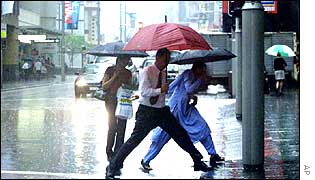 Project would only work in areas that can produce clouds Scientists in Britain are designing a machine that could help to produce rain in areas where it is needed. The plan involves forcing seawater through nozzles so that it becomes a fine spray, which can then gradually form into clouds. The research is being carried out at Edinburgh University by Professor Stephen Salter, who designed a way of producing electricity from waves 30 years ago with a system of floats known as "Salter's duck". His rainmaking idea has just been awarded a government development grant worth over �100,000. Fine spray The project is based around a wind-powered machine which looks rather like a giant lollipop. The stick is a large, hollow tube which stands upright on a platform on the sea, with its base just below the water. Two hollow blades stick out from the sides of the tube. As the wind spins these blades around, they power the turbine, which sucks up seawater by centrifugal force - no pumps, valves or pistons are needed. Professor Salter told the BBC: "We are trying to break through the layer of rather stagnant, humid air that's at the very, very bottom of the atmosphere, in contact with the sea surface, and lift large volumes of water through this and squirt them out from 10 metres up in the air as a very fine spray, with a very big surface area." Technical hurdles Professor Salter says that, ideally, his rainmaking machines would be positioned about 10 to 20 kilometres off a mountainous coastline - like the Red Sea or the Persian Gulf. They would then need an onshore wind to blow the moisture-filled air towards land, and let the mountains lift it further into the sky to form clouds. His team is now using computers to track the movement of air in different parts of the world, working out where to test the rainmaker, when it has been built. There are still technical problems to sort out, including controlling the size of the water droplets, and how to make sure that the salty residue falls back into the sea. People have been trying for many years to modify the weather, from tribal rain dances through to experiments in which small crystals were dropped into clouds to attract moisture. There has been some success with this method, but the regular use of "seeding" to influence weather patterns still remains a long way off. | |
See also:  08 Oct 02 | Middle East 29 Aug 02 | Hardtalk 30 Aug 01 | UK 14 Nov 97 | Science/Nature Internet links: The BBC is not responsible for the content of external internet sites Top Technology stories now: Links to more Technology stories are at the foot of the page. | ||||||||||||||||||||||||||||||||||||||||||||||||||||||||||||||||||||||||||||||||||||||||||||||||||||||||||||||||||||||||||||||||||||||||||||||||||||||||||||||||||||
| |
|  E-mail this story to a friend E-mail this story to a friend |
| |
| Links to more Technology stories |
| | | ||
 | ||||
 | | Back to top
| ||
| ---------------------------------------------------------------------------------- To BBC Sport>> | To BBC Weather>> | To BBC World Service>> ---------------------------------------------------------------------------------- © MMIII | News Sources | Privacy |






