|
 |
 | | | | | | |||||||||||||||||||||||||||||||||||||||||||||||||||||||||||||||||||||||||||||||||||||||||||||||||||||||||||||||||||||||||||||||||||||||
| | | You are in: Technology | |||||||||||||||||||||||||||||||||||||||||||||||||||||||||||||||||||||||||||||||||||||||||||||||||||||||||||||||||||||||||||||||||||||||||
|
| | Tuesday, 26 November, 2002, 08:45 GMT Computer viruses face slow down 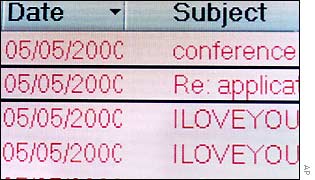 The ILOVEYOU bug spread via e-mail quickly Computer viruses could, in the future, find it much harder to spread themselves over the internet. Matthew Williamson, a researcher at the Hewlett-Packard laboratories in Bristol, UK, has come up with a way to slow down the rate of infection. It works by limiting the number of connections at any one time from an infected computer. This has the effect of throttling the spread of the virus, giving technicians time to spot and eliminate the bug. "The major problem with computer viruses is that because they spread so quickly and our response is so slow, they cause so much damage," said Dr Williamson. "We are tackling the fundamental nature of a virus," he told the BBC programme Go Digital. Delays ahead He took a novel approach to the problem of computer viruses. Instead of trying to find a way to kill a virus, he looked at how to prevent it from infecting other computers.
Other viruses, like the ILOVEYOU bug, have exploited security holes in Windows e-mail programs to spread. "When your machine gets an e-mail virus, it sends lots and lots of e-mail messages at a much higher rate than you would normally send them," he explained. "So if I put a limit on the rate of e-mail messages that you can send in every 10 minutes, then a virus trying to send 100 or 200 messages will very quickly get delayed." Infection slowed Dr Williamson tested his theory on a group of computers infected with the Nimda virus.
But when he applied his virus throttle, the rate of infection was much slower. "We found that we could detect and stop the Nimda virus within a quarter of a second of the virus trying to start transmitting itself," he said. Additionally, he found that using this technique had a negligible impact on the everyday use of a computer. His computer has been using the throttle technique for the last two months and he has never noticed any delay. Dr Williamson admitted that virus writers are ingenious and are always looking for ways around the latest anti-virus measures. "Computer security is a bit of an arms race," he said, "and any development you make to combat things will be countered." But he said that one of the advantages his anti-virus measure was that the way to get round it was to write a slower virus. This in turn would give technicians more time to deal with it. | | See also:  08 Aug 02 | Technology 04 Oct 02 | Technology 28 May 02 | Science/Nature 22 May 02 | Science/Nature 25 Oct 02 | Technology Internet links: The BBC is not responsible for the content of external internet sites Top Technology stories now: Links to more Technology stories are at the foot of the page. | |||||||||||||||||||||||||||||||||||||||||||||||||||||||||||||||||||||||||||||||||||||||||||||||||||||||||||||||||||||||||||||||||||||||
| |
|  E-mail this story to a friend E-mail this story to a friend |
| |
| Links to more Technology stories |
| | | ||
 | ||||
 | | Back to top
| ||
| ---------------------------------------------------------------------------------- To BBC Sport>> | To BBC Weather>> | To BBC World Service>> ---------------------------------------------------------------------------------- © MMIII | News Sources | Privacy |