|
 |
 | | | | | | ||||||||||||||||||||||||||||||||||||||||||||||||||||||||||||||||||||||||||||||||||||||||||||||||||||||||||||||||||||||||||||||||||||||||||||||
| | | You are in: Technology | ||||||||||||||||||||||||||||||||||||||||||||||||||||||||||||||||||||||||||||||||||||||||||||||||||||||||||||||||||||||||||||||||||||||||||||||||
|
| | Friday, 15 November, 2002, 08:50 GMT 3D dinosaurs bite back 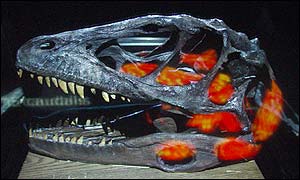 The system fills in areas of the skull
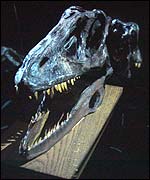
The Raptor project brings together a fossilised skull and 3D computer graphics to fill in unpreserved details of the dinosaur. The scientists hope to give people an insight into the way the creatures would have looked both on and under the surface. They also hope to change the way museums traditionally display collections. "We had the idea to build the display to communicate information in museums in a more exciting and effective way," said Oliver Bimber of the Fraunhofer Center for Research in Computer Graphics on Rhode Island. "If you go to a museum you will see that the way that artefacts are displayed are sometimes as old as the artefacts themselves" he told the BBC programme Go Digital. Dino rebuilt The display, known as the Virtual Showcase, contains the real skull of a mid Cretaceous raptor known as Deinonychus - literally Terrible Claw.
The team worked with a palaeontologist to construct graphical reconstructions of the muscles, eyes and skin of the raptor by comparing it with modern day creatures such as crocodiles. The display uses augmented reality - a way of merging real and virtual objects - to slowly build up the layers of muscle and skin on the skull. The different steps are accompanied by explanations and insights from a palaeontologist. Stereo images The Virtual Showcase uses mirrors to project the reconstructions into the correct cavities and areas on the skull. The graphics are projected as stereoscopic images - slightly different images for the left and the right eye. The viewer wears special glasses that rapidly show the left or right eye projections alternately. The glasses trick the brain's depth perception into seeing a 3D object. Motion sensors on the glasses also track the position of the visitor's head allowing the display to be seen by several people from different angles at the same time. As well as the Raptor project, the Virtual Showcase team are developing educational applications for children and programmes for the US military to aid with planning missions. | | See also:  05 Nov 02 | Technology 23 Oct 01 | Science/Nature 30 Jan 02 | Science/Nature 03 Sep 02 | Technology 08 Dec 00 | Scotland 23 Apr 02 | Science/Nature Internet links: The BBC is not responsible for the content of external internet sites Top Technology stories now: Links to more Technology stories are at the foot of the page. | ||||||||||||||||||||||||||||||||||||||||||||||||||||||||||||||||||||||||||||||||||||||||||||||||||||||||||||||||||||||||||||||||||||||||||||||
| |
|  E-mail this story to a friend E-mail this story to a friend |
| |
| Links to more Technology stories |
| | | ||
 | ||||
 | | Back to top
| ||
| ---------------------------------------------------------------------------------- To BBC Sport>> | To BBC Weather>> | To BBC World Service>> ---------------------------------------------------------------------------------- © MMIII | News Sources | Privacy |