
|
 |
 | | | | | | |||||||||||||||||||||||||||||||||||||||||||||||||||||||||||||||||||||||||||||||||||||||||||||||||||||||||||||||||||||||||||||||||||||||||||||||||||
| | | You are in: Technology | |||||||||||||||||||||||||||||||||||||||||||||||||||||||||||||||||||||||||||||||||||||||||||||||||||||||||||||||||||||||||||||||||||||||||||||||||||||
|
| | Wednesday, 20 November, 2002, 14:05 GMT Fighting the spammers head on 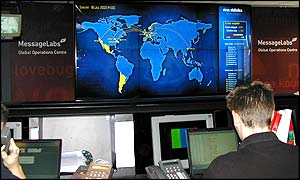 MessageLabs: Sees more spam than viruses
For filtering company MessageLabs, demand for its spam service is now outstripping demand for its virus service, a sign of worrying times according to Chief Technology Officer Mark Sunner. "I can see a situation where spam could make e-mail unworkable," he said. "Think what it is like to have to sort through your e-mail after being on holiday. That level of frustration will be a daily chore," he said. Deluge of junk The next time you get a piece of spam in your work inbox, spare a thought for your colleagues in the US before you complain.
One company, now on the books of MessageLabs, reckons that as much as 90% of its daily e-mail is unsolicited. Spam is on the increase in the UK, accounting for between 10 to 15% of e-mail received. In the US, as much as 40% of the daily inbox can be junk. "I think it will get to that level in Europe," said Mr Sunner. When MessageLabs was set up in 2000 as a spin-off of business internet service provider Star, spam was not a big problem. When the anti-virus service went live and the first virus was spotted within five minutes, the team felt they were on to a winner. It thought its future clearly lay in tracking and blocking viruses. But gradually demand increased, especially from clients in the US, for its spam filtering product. Learning engine Now MessageLabs has put spam firmly on its radar. It has built a learning engine which is constantly finding new types of spam and adding them to its database. E-mail accounts are set up to deliberately lure spam and the characteristics of the messages are also added to the database.
MessageLabs estimates that it stops about 90% of spam and only occasionally mistakes a genuine e-mail for a piece of junk mail. Being at the chalk-face of spamming has given the MessageLabs team an insight into the annoying practise of mass-mailing junk. Just as dotcom wannabes saw the net as a chance to make a quick buck, so too do the spammers although with far less financial risk to themselves. "It is incredibly low cost and just 1% of turnover means they can afford to keep blasting the stuff out indiscriminately," said Mr Sunner. Arms race With products on the market that allow users to mass mail thousands of messages in an hour, spamming is something anyone can do.
"It is almost like an arms race between people trying to stop this and the senders," said Mr Sunner. Spammers are getting smarter, offering so-called polymorphic spam that can change ever so slightly each time it is sent out as a way of beating the filters. Smart spammers are far and few between though. MessageLabs estimates that there are just four or five companies at the top of the junk-sending pile. The recent FriendsGreetings problem, in which users were asked to download software in order to view an e-card from a friend and unwittingly mass-mailed everyone in their address book, was traced back to an old spamming firm. Japanese haiku Now there is a new breed of e-mail marketer determined to clean up the image of spam and promote the obvious benefits of marketing via the inbox. One US firm, Habeas, has come up with the bizarre idea of using Japanese haikus (three-lined poems) to declare itself a legitimate e-mail marketer. Companies signing up to Habeas agree that they will not spam but only send e-mail information to those that have requested it. The header of the e-mail contains a haiku, as a way of alerting users to the fact it is not spam. On the other side of the fence is Spamhaus.org, an organisation dedicated to exposing spammers and the ISPs that allow them to use their bandwidth to profligate their trade. Hotel lobbies The battle is a hard one to win. Although most ISPs do not tolerate spammers and the European Union has introduced laws to make spamming illegal in Europe, there will always be spam-friendly havens around the world. And as long as a proportion of people, however tiny, are prepared to respond to the spammers, they will continue. Whatever the temptation to confront the spammers head on by replying to one of the countless offers of financial services or cures for baldness, do not do it, warns Mr Sunner. "The spammers' currency is live accounts and by responding you confirm that you exist. It is the worse thing you can do," he said. | |
See also:  06 Nov 02 | Technology 28 Oct 02 | Technology 23 Oct 02 | Business 21 Oct 02 | Technology 16 Oct 02 | Technology Internet links: The BBC is not responsible for the content of external internet sites Top Technology stories now: Links to more Technology stories are at the foot of the page. | |||||||||||||||||||||||||||||||||||||||||||||||||||||||||||||||||||||||||||||||||||||||||||||||||||||||||||||||||||||||||||||||||||||||||||||||||||
| |
|  E-mail this story to a friend E-mail this story to a friend |
| |
| Links to more Technology stories |
| | | ||
 | ||||
 | | Back to top
| ||
| ---------------------------------------------------------------------------------- To BBC Sport>> | To BBC Weather>> | To BBC World Service>> ---------------------------------------------------------------------------------- © MMIII | News Sources | Privacy |







 TALKING POINT
 Spam ban