|
 |
 | | | | | | |||||||||||||||||||||||||||||||||||||||||||||||||||||||||||||||||||||||||||||||||||||||||||||||||||||||||||||||||||||||||||||||||||||||
| | | You are in: Technology | |||||||||||||||||||||||||||||||||||||||||||||||||||||||||||||||||||||||||||||||||||||||||||||||||||||||||||||||||||||||||||||||||||||||||
|
| | Tuesday, 12 November, 2002, 08:38 GMT Chips cost environment dear 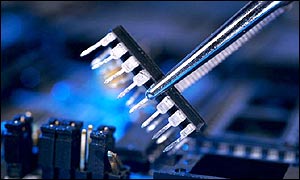 The chip places a great burden on the environment Next time you buy a new computer, you should consider the cost to the environment of the faster and more powerful chip in the box, say researchers. A study by a team at the United Nations University in Tokyo has found that, weight for weight, the average computer chip does more harm to the environment than the car. The manufacture of the tiny, wafer-thin slivers of silicon leaves behind a mountain of waste. "In order to produce one memory chip that weighs two grams, the total amount of materials and fossil fuels required to make that chip is 1,400 grams. That's 700 times the weight of the original chip," said Dr Eric Williams. Computer lifespan
The team found that far more materials, such as fuels and solvents, are needed for the chip's manufacture compared with other electronic products. This is because of the tiny size of the chip and need to keep it free of dirt and dust. Dr Williams' team was surprised by the results of its study, particularly when it was compared with the amount of material consumed in the manufacture of a typical car. "The ratio of 700 for the microchip compared with a ratio of two for the car was much larger than we were expecting," he told the BBC programme Go Digital. Cutting costs "It is important to learn that the microchip is not environmentally free because that has an effect on how people choose to use the equipment," he said.
The computer market is a competitive industry and manufacturers try as much as possible to cut the costs. But Dr Williams said companies could do more by looking at the different processes used to make a chip, including the use of chemicals. "It is not clear there has been enough effort to reduce the energy bill and the total materials used," he said. Should chip manufacturers be forced to take account of damage to the environment? Would you be willing to pay more for a new computer? Or should we keep our computers for more than just a few years? Send us your comments. The problem cuts both ways really. Consumers consume and they vote with their money. As long as people continue to obsess over faster and more powerful products, the Intels, the AMD's and the Microsofts of the world will continue to deliver; thereby constantly raising the bar and the demand for hi-tech products. After all, the desire and the consumption is what drives the bottom line. While that cycle persists, our governments are unlikely to take a hand in controlling the situation for fear of derailing what little momentum exists in the hi-tech industry. My suggestion is to stop wanting and start living. Environmental damage due to fossil fuels is a government/industry problem, but responsibility for less toxic materials falls squarely with the semiconductor industry. We should all take account of the damage we do to the environment. We know how much damage we cause but choose to ignore it, very soon it will be far too late. The problems with the current economic climate is that companies that emit pollution or highly toxic chemicals do not account for the damage that their products and processes cause society or the environment. The true cost of output and therefore the product, should reflect costs to society as well. Both computer chip manufacturers and consumers should take into account environmental impact, which should be quantified and reflected in the market price. Then, consumers will consume more judiciously and manufacturers will compete to develop innovative solutions to these problems. Jacking up the price of harmful consumerism is not entirely fair because it does not affect the wealthy. Controls should be implemented across the board, so that everyone contributes to reducing damage to the environment. Government should lead the initiative by publicising the issues. Perhaps one idea to address the problems would be an energy labelling scheme similar to that used on sales of white goods. This might in turn encourage people to consciously choose less environmentally damaging goods. It is imperative to take a clear measures towards companies directly involved in chip making to start thinking about this and if possible to switch gradually to alternative raw materials or sustainable technology. Chip manufacturers should of course take steps to reduce the impact to the environment of the manufacture, transport, use and disposal of their product. It would be better if computers were made to be upgraded, rather than replaced. If computers were built to be upgraded, this would significantly extend the life of the computer materials, be nicer for your pocket, and reduce the impact to the environment. Manufacturers should take account of the damage to the environment. I am not against faster chips but the true cost should reflected not hidden away. Louis | | See also:  06 Nov 02 | Technology 25 Feb 02 | Science/Nature 30 Apr 00 | Science/Nature 03 Oct 02 | Business 02 Oct 02 | Business 18 Jul 01 | Business 12 Jun 01 | Science/Nature 15 Oct 02 | Business Internet links: The BBC is not responsible for the content of external internet sites Top Technology stories now: Links to more Technology stories are at the foot of the page. | |||||||||||||||||||||||||||||||||||||||||||||||||||||||||||||||||||||||||||||||||||||||||||||||||||||||||||||||||||||||||||||||||||||||
| |
|  E-mail this story to a friend E-mail this story to a friend |
| |
| Links to more Technology stories |
| | | ||
 | ||||
 | | Back to top
| ||
| ---------------------------------------------------------------------------------- To BBC Sport>> | To BBC Weather>> | To BBC World Service>> ---------------------------------------------------------------------------------- © MMIII | News Sources | Privacy |