
|
 |
 | | | | | | |||||||||||||||||||||||||||||||||||||||||||||||||||||||||||||||||||||||||||||||||||||||||||||||||||||||||||||||||||||||||||||||||||||||||||||||
| | | You are in: Technology | |||||||||||||||||||||||||||||||||||||||||||||||||||||||||||||||||||||||||||||||||||||||||||||||||||||||||||||||||||||||||||||||||||||||||||||||||
|
| | Monday, 12 August, 2002, 09:54 GMT 10:54 UK Space elevator takes off 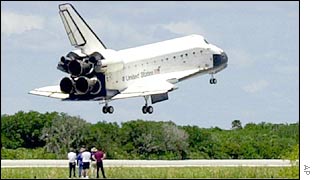 Could the shuttle become obsolete? Taking a lift into space may sound like science fiction but scientists are meeting in Seattle to discuss how to build such an elevator. Seattle-based company High Lift Systems is looking into the idea, backed by a $570,000 grant from the National Aeronautics and Space Administration, (Nasa). The company is holding a two-day conference to discuss the technology and funding and hopes to begin construction within the next few years. "Technology is now catching up with science fiction. It should be taken pretty seriously," said Brad Edwards of High Lift Systems. "The technology's not quite here, but in the next couple of years the technology could be ready to consider construction of the first space elevator." Catapulted into space The concept is simple. The elevator is essentially a cable, attached at one end to an ocean-going platform.
Commercial loads, such as sections of space stations, and eventually, perhaps, human tourists, are then mechanically pulled up the cable and catapulted into orbit at a fraction of the present cost. Dr Edwards says that whoever builds that first elevator, at a cost of $10bn, will have a huge advantage over any competitors. "In the next 15 years you could have 10 elevators up, you could have large elevators, you could have thrown an elevator to Mars," he said. "Now you can use those wonderful capitalistic practices and drop your prices to zero. Whoever puts up the first elevator could eventually own space for the next 100 years." The European Space Agency, Nasa and investment companies are attending the two-day conference. Nasa's Dr Robert Cassanova says that although the elevator has a lot of potential, there are still technical and financial problems. He says that we should not expect to see that first lift into space for at least another 50 years. | |
See also:  13 May 02 | Science/Nature 19 Jun 02 | Science/Nature 07 Nov 01 | Americas 03 Nov 01 | Science/Nature 25 Jun 02 | Americas Internet links: The BBC is not responsible for the content of external internet sites Top Technology stories now: Links to more Technology stories are at the foot of the page. | |||||||||||||||||||||||||||||||||||||||||||||||||||||||||||||||||||||||||||||||||||||||||||||||||||||||||||||||||||||||||||||||||||||||||||||||
| |
|  E-mail this story to a friend E-mail this story to a friend |
| |
| Links to more Technology stories |
| | | ||
 | ||||
 | | Back to top
| ||
| ---------------------------------------------------------------------------------- To BBC Sport>> | To BBC Weather>> | To BBC World Service>> ---------------------------------------------------------------------------------- © MMIII | News Sources | Privacy |






