|
 |
 | | | | | | |||||||||||||||||||||||||||||||||||||||||||||||||||||||||||||||||||||||||||||||||||||||||||||||||||||||||||||||||||||||||||||||||||||||
| | | You are in: Technology | |||||||||||||||||||||||||||||||||||||||||||||||||||||||||||||||||||||||||||||||||||||||||||||||||||||||||||||||||||||||||||||||||||||||||
|
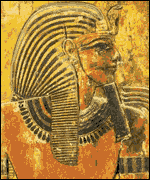
| | Friday, 26 July, 2002, 11:28 GMT 12:28 UK Egypt rebuilds ancient tomb 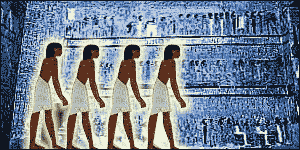 The secrets of Seti will once again be revealed Egyptologists are working to make an exact copy of the tomb of Seti in Egypt. Subsidence closed the original desert tomb many years ago, but using high-resolution images and 3D maps, project workers hope to build an exact replica of the tomb near Egypt's new National Museum by 2005. Leader of the project Adam Low told BBC World Service: "The facsimile will be more complete than the tomb is now. "We are working to show what is physically possible using the cutting edge of technology." Squeezed walls It aims to enable people to experience the tomb without damaging it.
"It was discovered in 1817 by Belzoni," he explained. "But within a few years sections had been hacked out and taken to museums around the world. "More endemically, the surface had been squeezed, which was basically a process of casting. According to Low, using a mixture of wax and vegetable fibre, art historians had attempted to obtain true reliefs. However, the mixture had the detrimental effect of also removing all of the paint. "We took this as our first starting point as it raises lots of questions about what you do with facsimiles," Low said. "Should the facsimile aim to show the tomb exactly like it is? Are there ways that we scan sections of Seti and bring more and more data to life?" Dust replica Using high quality scanning equipment, individual artefacts which are currently scattered in museums and galleries around the world, are now painstakingly being recorded and will be rebuilt using this data.
"Most of the digital work that has gone on focuses on screen-based display," Low explained. "But you can now take our digital data and carve it and rout it. "It will be an exact replica of the tomb to an accuracy of a tenth of a millimetre. Including dust on the floor, the temperature and smells in the tomb; it will have exactly the same qualities." National heritage The tomb of Seti is often considered the largest and most lavishly decorated tomb in the Valley of the Kings in Egypt. Since the 1980s it has been closed to the public because of structural problems - exacerbated by the thousands of annual visitors. The former head of Egypt's Supreme Council for Antiquities, Professor Gaballah ali Gaballah, said there was a real need for the replica project. "This tomb is not visited by everybody... we do not even allow Egyptian students in and that is wrong as this is their heritage; they are entitled to it." | | See also:  14 Jun 99 | Middle East 28 Mar 00 | Middle East 11 Nov 00 | Middle East 04 May 02 | From Our Own Correspondent Internet links: The BBC is not responsible for the content of external internet sites Top Technology stories now: Links to more Technology stories are at the foot of the page. | |||||||||||||||||||||||||||||||||||||||||||||||||||||||||||||||||||||||||||||||||||||||||||||||||||||||||||||||||||||||||||||||||||||||
| |
|  E-mail this story to a friend E-mail this story to a friend |
| |
| Links to more Technology stories |
| | | ||
 | ||||
 | | Back to top
| ||
| ---------------------------------------------------------------------------------- To BBC Sport>> | To BBC Weather>> | To BBC World Service>> ---------------------------------------------------------------------------------- © MMIII | News Sources | Privacy |