|
 |
 | | | | | | ||||||||||||||||||||||||||||||||||||||||||||||||||||||||||||||||||||||||||||||||||||||||||||||||||||||||||||||||||||||||||||||||||||||||||||||||||||||||||||||||||||||||||||||||||||||||||||||||
| | | You are in: Talking Point: Earth Summit | ||||||||||||||||||||||||||||||||||||||||||||||||||||||||||||||||||||||||||||||||||||||||||||||||||||||||||||||||||||||||||||||||||||||||||||||||||||||||||||||||||||||||||||||||||||||||||||||||||
|
| |  Tuesday, 3 September, 2002, 10:33 GMT 11:33 UK Tuesday, 3 September, 2002, 10:33 GMT 11:33 UK Earth Summit: Are corporations helpful or a problem? 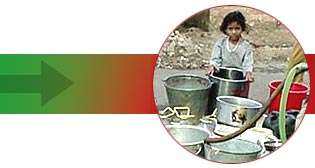 We discussed the Earth Summit with Dr Tom Bigg of the International Institute for Environment and Development, who answered your e-mails and phone calls.  Click here to listen to the programme Click here to listen to the programme Big businesses should invest in development projects in poorer countries says British Environment Secretary Margaret Beckett. Where governments are failing to invest in clean water and sanitation, corporations can fill the gap with schemes that are "not exploitative" said Ms Beckett, at the Earth Summit in Johannesburg. The strong executive presence at the summit caused dismay amongst environmentalists - the British delegation, led by Margaret Beckett, includes the chief executive of Thames Water and chairman of mining giant Rio Tinto. Ten years after the world leaders gathered at the Earth Summit in Rio to tackle environmental problems, nothing has really changed. The Johannesburg summit is expected to build on the Rio conference through the launch of concrete actions that will promote sustainable development. Do you think private enterprise and overseas aid can work well in combination? Do you trust the motives of big business getting involved in aid projects? What do you think of commercial companies being represented at this conference? Should the summit produce binding global rules for corporations? This Talking Point is now closed. Your reaction
Joe Goodwin, U.S. Truly, the USA has a system of corporate socialism and not the democracy which is so proudly claimed. As just one from the multitude without political representation, I feel both enraged and deeply saddened that the people who hijacked our government, Bush, etc, have no sense of moral responsibility regarding the biosphere, ignore the Kyoto Protocols and basically screw things up for the rest of us on this planet. Although I agree that corporations have the money to develop new technologies that will help the environment, I have to be sceptical. Many won't bother. Why would an oil company invest in renewable energy when they would put themselves out of business? The main problem is that every body is just talking about reducing greenhouse gasses etc, yet no one as the guts to take any action.
Johnny Appleseed, USA There is enough money in the world to feed everyone, provide safe drinking water for everyone and to stop hundreds and thousands of children dying each year from disease. It's the rich nations who should be ashamed...only they can help and they continue to bury their heads in the sand. Margaret Beckett's idea is not going to work since huge corporations owe allegiance to no one country. They can violate environmental and labour laws passed in their 'home' countries by relocating offshore where standards may be lower or nonexistent thanks to complaisant or corrupt governments. Expecting a corporation to show a social conscience when this conflicts with their profits (the only product a corporation is responsible for) is unrealistic.
A Third World Citizen, India/Africa Remember Business, Government and all other organisations are made up of people like yourself. The way to a sustainable future is to change your own unsustainable habits as far as you can (and keep looking for opportunities to do more). Then through your thoughts and actions help the organisations you work in or are involved with change for the better as well. Corporations and some governments have become a liability for the planet. They should be dismantled and replaced by systems that work for the benefit of the earth and its people. If evolution exists then one hope is that we will learn to respect the earth and all that lives on it. If we don't take this responsibility seriously, then we are makers of our own destruction. Money will mean nothing when there is no air left to breath. The simple truth of the matter is that the governments of the World will continue to do nothing, until it's too late. The more damage we do to the planet we ultimately do to ourselves, never forget that this planet has seen many species come and go, we are no different. What is so truly annoying is how we seem to be rushing head long to our doom as a species while we count our money on the way... I think it is time for accountability, and responsibility from both the developed, and third world. How is the third world to 'develop' if the US/Europe provide huge amounts of welfare money to their agriculture industry, while at the same time the IMF and World Bank tell the third world they must open their countries economies up to free trade. Does this sound rational? People of the third world need better govts, ones that care for the welfare of their people. Corporations don't do anything without expecting to make a profit. Aid should be received from governments, in the form of projects built and operated by companies from the donating countries. These projects could then be paid for by the donating government. That way, a lot of the corruption that presently occurs can be avoided. I think taxpayers in the so-called developed countries are sick of seeing their hard earned taxes being squandered by despot Third World governments. It's very easy to be cynical about big business, particularly in the wake of the accountancy scandals of Enron and the like but remember much of the really harmful pollution to our planet comes from developing countries. For instance the use of 'brown' coal in Russia, which is twice as pollutive as normal 'black' coal. Multinational countries have brought us the prosperity we enjoy today. Give them a break and look at the problem sensibly.
Gary Chiles, New Zealand Government aid organisations have too many drones, and are too slow and inefficient. Private organisations are more efficient but should declare any financial interest. Legislate for a healthy environment but count on the private sector to solve the problems eg fuel cell cars.
Guy Chapman, UK Private business can do a lot for the poorer countries. The job of the development agencies should be helping find markets for poorer countries' goods. If they have something to sell, both they and the buyers should benefit. Government-mandated recycling programs have often had the effect of wiping out private recycling industries. Some commodities, such as aluminum cans and scrap, have very ready markets and do not need large-scale government involvement. Some others, like used newsprint, have very limited markets. Mandating recycling of such goods only causes a glut. Processing old newsprint into pelletised fuel would make much more sense.
Given the need to act quickly, the second option may be the only real choice even though it will lead to a world of decreased cultural diversity. The corporate route has many dangers, but if it can deliver the opportunities for women associated with lower birth rates maybe it is an evil to be accepted.
Craig, UK It's good to see this discussion and all sorts of contributions from different sides of the debate. But one of the biggest problems is that most people in Britain don't want to do anything that involves changing their lifestyle, using their car less, changing what they eat, moving from their chair, or thinking about it. Everyone contributing here is clearly concerned, but a lot of people out there won't vote for anything that involves any sacrifice for them. The simple act of putting a 15c tax on plastic bags in Ireland has already earned millions of euro within a few months. The revenue generated from this small tax will be spent on environmental projects. Why can't the same be done in other countries like the UK and US?
Shawn, Washington, DC, USA Corporations do things as part of a strategy. It is important not to let corporations get influence where communities and economies are fragile. The danger is that less aid will come from governments, and more will come from large companies with hidden agendas. Aid from corporations will diminish the no-strings-attached help that is needed, and that kind of help has to be increase, not diminish. Of course private enterprise and government resources can work effectively... it is just unlikely to happen, as long as private enterprise is given the chance to influence decisions taken to protect the environment. Almost every government in the developed countries pays lip service to solving environmental problems - some are worse than others. Reading some of the comments posted here, from people in developed countries, it is clear that developing nations with environmental problems to solve cannot rely on the goodwill of the people in developed countries, who are more likely to be concerned with paying as little as possible for their energy resources and their cars.
Big business could be part of the solution, but it's just naive to think they'll do it of their own accord. A business is a machine for making money - it's up to government to set the parameters for business in such a way that the environment is improved by their activities, rather than being wiped out, as is happening at the moment. The real problem is that democratic governments at the moment seem too corrupt to stand up to vested interests for the sake of the future generations. The Earth Summit is a meaningless exercise without involving multi- national corporations and/or creating compensation funds for anti-pollution, biodiversity and economic development. Some business is good, because it is of benefit to both parties to it. All Government is bad, because progressive taxation has no redeeming features for the higher income earners. Human nature being what it is, any business that starts throwing investors' profits at altruistic causes in useful quantities is likely to find itself abandoned by its shareholders. What the starry-eyed Margaret Becket thinks SHOULD happen in terms of corporate investment, and what WILL happen, are poles apart.
Anon Why should I care when I will be dead when the disasters happen? On TV yesterday, George W. Bush said a better way to combat the wildfires raging in the state of Oregon is to allow more clear cutting by the timber companies. It is that sort of mentality that will hasten our planet's destruction.
Neal Richardson, USA/UK It is naive to be talking about sustainable development in the world while the vast majority of people use wood to do their cooking! It's all very well having a knee-jerk bash at the US for consuming all that oil, but it's ironic that oil is a lot cleaner and environmentally friendly than knocking down zillions of acres of forest just to cook dinner. The huge pollution cloud over SE Asia these days is not the fault of the US burning too much oil! I can only speak for a small island in the Caribbean: Antigua. In the last 15 years I have watched the development of this island and it has been fraught with difficulties. Sugar has become non-viable, and the development of tourism has also become very fickle. The assistance given by the (developed) world has been misdirected. We have sent a minister and his entourage to this conference at enormous expense which we can't afford and I am sure Antigua will get nothing out of it. We need a transfer of knowledge to develop agriculture, less policing and the chance to develop some of these good ideas even if they are taking cash away from he larger financial centres. Surely they can afford to allow this?
Jeremy, Edmonton, Canada As an environmental engineer, I can see that the biggest problem facing us is in educating people, particularly in the developing world. For example, there has been much criticism of the US here. This is an example of the paradox that often accompanies environmental issues - in this case you can't force change in the US population without republic. The same can be seen in the "developing" world, any attempt to change the traditional ways of doing things often is met with the charge of "cultural imperialism". This isn't about saving the planet. Once we have destroyed ourselves, the planet will heal.
Luke Van Arsdale, Anchorage, Alaska, USA Unlike countries such as Germany where the public is required to sort out their waste by themselves, the rubbish in the UK is sorted out after it's collected. This method is highly ineffective and seems a big obstacle to the awareness among the UK public of the importance of recycling. People must change their lifestyles to what our Earth can and will accommodate. If that means less air conditioning, then so be it. The Earth must come first and foremost. It will take an epic global disaster for most Americans to see that this is an issue. There is a strong lobby here backed by 'scientists' and funded by industry lobby groups who say that global warming isn't taking place at all; that the environment is just fine, perhaps even better than ever and biodiversity is someone else's problem. What do you do when George W. Bush is their biggest supporter? He is an oil industry man through and through. I don't want to be a doom and gloom merchant, but the country which is most responsible for over consumption is led by a man who purposefully reverses the small amount of progress we have made so far and tears up the single most important international environmental agreement because it was "bad for US business". The global reaction to his behaviour has been disappointingly quiet. It breaks my heart, but I honestly don't believe we have the consensus of will to prevent our own destruction.
Helena Cepeda, Horta, Portugal Ecology and the importance of biodiversity need to be taught from before kindergarten. A family planning structure, including birth control methods and education, should be required in all nations. The food we grow to feed cattle and other meat related products could feed the entire world. Alternative energy resources are necessary now. If President Bush doesn't join the Kyoto Accord, we are all doomed. Why does he have to represent all Americans when all environmentalists disagree with him?
Chris, UK Today we make choices and tomorrow others see the consequences. Governments need to make the fiscal link. The big question is how to get over national self-interest, which divides policy. I hope the US will wake up to its responsibility and lead by example at the next Summit. Is the US President a great leader or hostage to his ambitions of reelection? Oh dear, the anti-capitalist crowd are out in force again, how depressing. When will these people realise that the problem isn't too much capitalism, it's too little. By creating markets and property rights in environmental goods we give individuals the information about the costs of their activities and allow them to decide how to change their lifestyle. Centralised planning and control to save the environment will fail just like the Soviet Union failed. Robert from Switzerland claims that the problems are caused by too "little" capitalism. Er... what? Capitalism is all about quantity - greater profit margins, more sales leading to more profits, resulting in larger dividends for shareholders. Unfortunately, that's no way to save the environment. Environmentally friendly and organic goods are more difficult to produce, and therefore more expensive. The profit margins are lower, since the companies producing them are generally smaller and (ideally) more localised. Anyone with a conscience won't object to paying extra, or making the extra effort to obtain these goods. It's all about quality - quality of food produce, air quality, and quality of life in general. This has nothing to do with capitalism. Blame governments all you want. It is the people, each and every one of us, who carry the responsibility for this planet. I believe it is very serious but I do wonder why we keep applauding the new cheap airlines using untaxed fuel to pollute our planet. The politicians seem to be applauding these new carriers but surely we must increase fuel tax to discourage their growth? It cannot be right that it is cheaper to fly to Manchester or Paris than to go by rail or coach. Car pollution is a problem but not as serious as aircraft. With the many advances in technology, sustainable development is possible. People should be educated to use more recycled stuff, reduce waste and above all, ask the question before buying anything - if they will use it regularly that it is justified. Excessive materialism has led to this consumerism frenzy. And the rich nations always have dumping grounds in poor countries. This should be abolished at all costs. Then the realization will come as to how they will manage all the waste accumulating in their backyards!!
Robin Purdey, Katikati, New Zealand One of the areas that concerns me is waste. I like to buy fresh fruit and veg and so much of it is packaged in plastic punnets, even in fruit and veg shops. I hate throwing them away, and haven't found a way to recycle them. Drink driving, once common, is now socially unacceptable. Change lacking popular support must be driven by government with the force of law. Recycling must be forced, toll roads set up, companies fined - it sounds draconian but is really the only way to get people to do what "is right". Change is possible, it's a question of political will.
Raymond Malik, Doha, Qater Why doesn't the UK charge users to use plastic bags like they do in Ireland? Why don't the supermarkets stock biodegradable or washable nappies? I am the only person in a wide group of mothers that uses washable nappies. No-one seems to care what they're doing to our planet. There seems to be no incentives to encourage people to go to a little more effort. If the same amount of money and effort that has been used to develop IT were applied to R & D, much more fuel efficient and cleaner ways of driving engines for transport and industry could have been developed a long time ago, but governments and industry are too beholden to the big oil lobby. This will only change if consumers make their voices heard by taking to the streets en masse and demanding action before the planet becomes too unpleasant and noxious for man or beast. I don't get it. If money is the problem then just do what we do with every faulty system. Fix it! The monetary system is not a fact of life but a system we created. We can change the rules as we wish to suit ourselves. Not enough people buying fuel efficient products because they are too expensive or they already have something that does the job already? Fine, just change the rules so people have the money to 'waste' on it.
Richard Bruckdorfer, UK We are forgetting that we inherited the world, we do not own it. We are here to look out for and make sure 'lesser' species survive and are maintained. The single most damaging human trait on this planet is greed, and it is greed on individual and corporate levels that has caused these global problems. Powerful multinational fuel companies and governments will never agree to free sustainable energy sources because there is no profit in free, sustainable energy.
Mike Bannister, Dover, UK The 'root' of the problem is due to human population. Control/reduce that, and then there will be less demand for fuel, food, land etc. Since this is the only planet in the ENTIRE UNIVERSE that we know that can sustain life why do we destroy it? Perhaps the problem lies with me. I read your reports on the environment and feel angry that we are treating this beautiful planet with such contempt, and yet what do I do about it? Not much except shake my head and hope something changes. Perhaps until I realise that unless I begin to recycle materials, use less water, buy less gadgets, walk or cycle more and wise up to my own responsibility to this miracle of a planet, then governments will continue to pay lip service. I found the survey to be frightening though nothing new. My biggest problem is what can I do? I know that I can recycle more, throw away less, consume less, but on a certain level the infrastructure has to be put in place in order for there to be the major changes that are needed. And no one, at least in this country, seems willing to do it. So I can't recycle glass because the city will not let me and in order to stay current in this techno savvy, hip city, I have to have all the latest and greatest stuff, wear the nice clothes, etc... which means I have to be a massive consumer which I do not want to be. Oh, what to do? What to do? Imagine if all the taxis in New York city ran on solar power. Oh, the dream still lives on and I have a feeling we're all going to save ourselves at the very last second(the clock is all ready ticking). First, stop worrying. Second be a good consumer. Third be a good friend - share the pleasures of composting, solar heated water and local food with people you know, real things mean something to everyone. I am very active in striving towards lowering my ecological footprint and if I were permitted to work from home I would achieve a close to sustainable level of living. What really gets me is the pathetic attitudes of people. I get mocked for recycling, I have had a stand up argument in a shop over a cashier insistence that I had to put the single item I had bought into a plastic carrier, I get jibes about buying organic where ever possible local food, laughed at for using washable nappies, sneered at for using eco friendly alternatives to cleaning agents, the list just goes on and on. The truth is I feel a lot more healthier both in body and mind and have really found it little effort to change my lifestyle. I feel in control of my life rather than being brainwashed by the relentless marketing, branding and consumerism. We live in a false economy, and we need to stop subsidising products and ensure they are costed according to their true lifespan cost.
Wendy, UK I wish to convey my appreciation for this excellent report. Most of the things are known but this report has compiled them in decent manner. One thing I thought you left out in Food section is the post-harvest management. Nearly 20% of India�s produce is lost annually to poor post-harvest management, which is almost non-existent in India. The main damage is from pests like rats, moisture and poor storage. If his could be contained this would boost the overall availability of food. The whole concept of living will need to change if real progress is to be made on the issue. Human activities revolve around making something or provide a service for PROFIT not because of necessity, hence the capitalist society as we know it. Businesses strive to find new products to entice us with but how many products or services do we use that are essential and not a mere convenience? But on the other hand how do you currently motivate people to give up unnecessary things or work for the benefit of the community as whole and indirectly oneself? Taxation does not help, it merely compounds the problem by increasing the cost of living, because people will be looking for higher wages to compensate for the extra burden. Governments do not have the answers they are part of the problem, in fact some governments since the Rio Summit have cynically increased taxes under environmental pretences without actually using the revenues raised to efficiently ameliorate services or the environment by stimulating radical thinking. And yet, after all this maudlin analysis, the gloomy disasters predicted first by the Club of Rome and later by Carl Sagan never came to pass. One sixth of the entire world's population is overweight, food surpluses reign almost everywhere, and no one starves anymore except where they insist on indulging in civil war. And prosperity is spreading to every place that us willing to allow it to grow - even China these days. (Though as has been the case since time immemorial, stupidly chosen building locations along riverbanks are flooded now and then.) So, really, why ought anyone to pay heed to all this gloom and doom?
Suzanne Duarte, Amsterdam, The Netherlands In my opinion Irish people are so lazy when it comes to recycling, in my home town there is one area for recycling, and this is one and a half miles from me, I don't have a car and this is impossible. You can complain until you are blue in the face, but they don't listen. Can you make some suggestions for a couple on their own on how to be more aware? If each of us tried to do something today, however seemingly insignificant or ineffective, to change this trend, we'll be on the right track. Different people with different powers can do different things. Whether it be putting someone else's litter into a waste bin, drafting up a household recycling plan with the kids tonight or choosing environmentally aware suppliers and manufacturers, we can all do something. Please don't just sit there with your thumb in your mouth complaining - it makes it so much harder for the rest of us when you do. Sustainable development as it currently stands is little more than a buzzword. The majority in the west will never give up the luxuries and excesses we've come to expect in the last hundred years. This isn't a problem on a governmental level. Currently, the only options seem to be forcing people and corporations by law to do what is necessary, or just continue to throw around catchy buzzwords that in the end provide very little. Is it ever likely that governments will enforce the controls needed to solve this problem? I doubt it - it's bad for their next election chances! Could you cover the world's deserts with solar panels and would this produce sufficient energy for the worlds current consumption? If evolution is really true then why should we care? I agree with Satish Kumar totally - small and local is the way to go. I cannot believe that anyone contests this idea. Julian Morris is talking about property, it makes no sense to me. He is a capitalist trying to protect his privileged way of life. We buy courgettes from Asda from God knows what country and we are so stressed from our modern lives and our hurry-sickness that we don't even appreciate the shape, smell or marvel at the fact that this came from the earth. We will never meet the person that grew it for us to eat. This is so wrong but where do we begin to change things? My fear is that we are so deep into consumerism (in the Western world) that it will take far too long to change things. The earth will give up before the views of the many change. I cannot believe that governments do nothing (and I mean nothing) to raise awareness about wastefulness. To Mr Lomborg especially - you have consistently argued against Kyoto, suggesting that countries should instead 'adapt' to climate change. This is folly. How do you keep adapting to a problem that will keep getting worse until you address the root cause? It's like a hamster having to run faster and faster on a spinning wheel. I really feel that you have played such an unhelpful role in recent years. I hope you feel at the end of your life that you made good use of your time on earth. Corporations are only there to make money for themselves and their shareholders. Genuine, sustainable development won't make money for multinationals. Allowing countries to genuinely control their resources won't make much money for multinationals either. Multinationals prefer buying raw materials at artificially low prices and then trying to sell back finished products at extremely high prices. Not helpful for development at all. The technology that will help save the environment will be developed by corporations, not by anti-corporation environmentalists. Environmentalists have a responsibility to push corporations towards greener practices, but change will never come without money for research and development. Who's going to provide the money? Some environmental activist who lives in his mama's basement? | |
Internet links:  The BBC is not responsible for the content of external internet sites | ||||||||||||||||||||||||||||||||||||||||||||||||||||||||||||||||||||||||||||||||||||||||||||||||||||||||||||||||||||||||||||||||||||||||||||||||||||||||||||||||||||||||||||||||||||||||||||||||
| |
|  E-mail this story to a friend E-mail this story to a friend |
| |
|
| | | ||
 | ||||
 | | Back to top
| ||
| ---------------------------------------------------------------------------------- To BBC Sport>> | To BBC Weather>> | To BBC World Service>> ---------------------------------------------------------------------------------- © MMIII | News Sources | Privacy |