|
 |
 | | | | | | |||||||||||||||||||||||||||||||||||||||||||||||||||||||||||||||||||||||||||||||||||||||||||||||||||||||||||||||||||||||||||||||||||||||||||||||||||||||||||||||
| | | You are in: South Asia | |||||||||||||||||||||||||||||||||||||||||||||||||||||||||||||||||||||||||||||||||||||||||||||||||||||||||||||||||||||||||||||||||||||||||||||||||||||||||||||||||
|
| | Monday, 9 December, 2002, 15:27 GMT Bangladesh arrests follow blasts 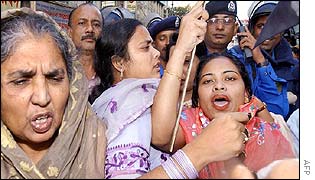 Opposition supporters clashed with police in Dhaka Around 40 opposition activists are now under arrest following Saturday's bomb blasts in Bangladesh, including two former ministers. The government says the arrests are not connected with the explosions and that it does not know who carried out the attacks.
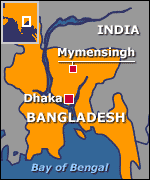
They went off in crowded cinemas and killed at least 18 people. At least 40 people remain in critical condition in hospital. Many of those detained were dragged from their beds in the early hours of Monday. Security has been increased across the country following the attacks and police discovered several small home-made bombs at the High Court in Dhaka on Monday. Police didn't link the bombs with the explosions in Mymensingh. Sense of turmoil Mouring rituals have taken taken place in Mymensingh for the victims. Similar commemorations have been held in other towns and cities. But the mourning ritual in Bangladeshi capital, Dhaka, was marred by clashes between Awami League supporters and the police. The opposition Awami League has accused ministers of using the bomb blasts as an excuse to round up and silence key members of its party, even though the government has a huge majority in parliament.
Several pro-opposition intellectuals were also arrested. The government says that most of those being held are suspected of anti-state activities. The Awami League have called a nationwide one-day general strike next Thursday to protest against both the bombs and the arrests. Ministers have repeatedly stressed that anyone who damages Bangladesh's international reputation is liable to arrest and imprisonment. Inquiry ordered But the timing of the arrests, so soon after the bomb blasts, has raised questions. A judicial inquiry into the attacks has now been ordered under a retired High Court judge. At one point over the weekend, Home Minister Altaf Hossain Chowdhury was reported to have suggested that the al-Qaeda network might have been responsible but he has since denied any link. Lawyers representing Saber Hossain Chowdhury and Tofail Ahmed have expressed concern that their clients might be tortured or ill-treated while in prison. | | See also:  08 Dec 02 | South Asia 16 Oct 02 | South Asia 29 Sep 02 | South Asia 29 Sep 02 | South Asia 24 Oct 02 | South Asia 01 Nov 02 | Country profiles Top South Asia stories now: Links to more South Asia stories are at the foot of the page. | |||||||||||||||||||||||||||||||||||||||||||||||||||||||||||||||||||||||||||||||||||||||||||||||||||||||||||||||||||||||||||||||||||||||||||||||||||||||||||||||
| |
|  E-mail this story to a friend E-mail this story to a friend |
| |
| Links to more South Asia stories |
| | | ||
 | ||||
 | | Back to top
| ||
| ---------------------------------------------------------------------------------- To BBC Sport>> | To BBC Weather>> | To BBC World Service>> ---------------------------------------------------------------------------------- © MMIII | News Sources | Privacy |