|
 |
 | | | | | | |||||||||||||||||||||||||||||||||||||||||||||||||||||||||||||||||||||||||||||||||||||||||||||||||||||||||||||||||||||||||||||||||||||||||||||||||||||||||||||||||||||||||||||
| | | You are in: South Asia | |||||||||||||||||||||||||||||||||||||||||||||||||||||||||||||||||||||||||||||||||||||||||||||||||||||||||||||||||||||||||||||||||||||||||||||||||||||||||||||||||||||||||||||||
|
| | Tuesday, 3 December, 2002, 16:24 GMT Doubts over Bangladesh rebel accord 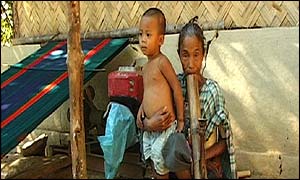 Peace dividends have not lived up to many hopes
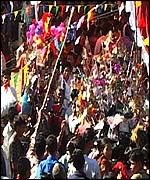
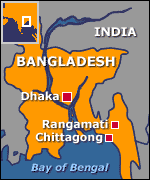
Under the terms of the treaty the area was given more autonomy and a regional council established to improve relations between migrants to the area from the plains of Bangladesh and the indigenous population. But indigenous people in the area say peace has not brought with it all that was promised. And the government is concerned by tensions within the indigenous community that they say are hindering development. Festivities The Khothin Chibor Dan festival takes place each year in Rangamati, a bustling town on the edge of a large lake in the Chittagong Hill Tracts.
A few years ago, this celebration would neither have been so exuberant nor so well attended. Until 1997 the area was the centre of the long-running guerrilla war between the Shanti Bahini and Bangladeshi troops. But while fighting has stopped, indigenous leaders are disappointed by the progress made since the peace deal was signed.
"The indigenous people, particularly, are leading a very miserable life. "Moreover, we see there is a military administration in the Chittagong Hill Tracts, so the common people, they're not in a position to move from one place to another place freely," he says. "People always live in fear." Arrested development Rangamati is one of the poorest regions of Bangladesh and it is here that the after-effects of a 20-year insurgency are most keenly felt. In the villages there's little or no electricity, no running water, little healthcare and few schools.
Indigenous people once formed the overwhelming majority of people here, but now Bengali settlers equal them in numbers. Arup Chakma, a teenage member of the main indigenous group, the Chakmas, says the traditional population has welcomed the incoming Bengalis. "But the settlers don't treat the hill people as human beings." Mr Chakma is optimistic about his own future, but says: "If the government doesn't implement the peace accords, I think our lives will not be better." Many villagers also complain that they haven't been properly compensated for land seized by the newcomers as was promised by the peace treaty. Divisions And now even the future of the peace treaty looks uncertain. The government of Khaleda Zia, which came to power last year, pledged to revoke the 1997 agreement saying that it had made too many concessions to indigenous people.
Moni Swapan Dewan, deputy minister for Hill Tracts Affairs in the Bangladesh Government, asserts that "among the tribals and Bengali peoples, we don't have any misunderstandings". "But there are two groups who're still fighting each other," he says. "One group is for the implementation of the peace accord and another group are opposing the peace accord. "Its obvious we are suffering due to the fighting between the two groups. Its hampering the development of the Chittagong Hill Tracts and has caused some problems." Outside the royal residence of Raja Devasish Roy, chief of the Chakmas, there's a carnival atmosphere as the festival comes to an end. It's one of the measurable successes of the peace treaty that succeeded in bringing an end to a bitterly fought and brutal insurgency. But there remains much still to done. | | See also:  25 Feb 01 | South Asia 02 Dec 98 | S/W Asia 29 Feb 00 | South Asia Internet links: The BBC is not responsible for the content of external internet sites Top South Asia stories now: Links to more South Asia stories are at the foot of the page. | |||||||||||||||||||||||||||||||||||||||||||||||||||||||||||||||||||||||||||||||||||||||||||||||||||||||||||||||||||||||||||||||||||||||||||||||||||||||||||||||||||||||||||||
| |
|  E-mail this story to a friend E-mail this story to a friend |
| |
| Links to more South Asia stories |
| | | ||
 | ||||
 | | Back to top
| ||
| ---------------------------------------------------------------------------------- To BBC Sport>> | To BBC Weather>> | To BBC World Service>> ---------------------------------------------------------------------------------- © MMIII | News Sources | Privacy |