|
 |
 | | | | | | ||||||||||||||||||||||||||||||||||||||||||||||||||||||||||||||||||||||||||||||||||||||||||||||||||||||||||||||||||||||||||||||||||||||||||||||||||||||||||||||||||||||||||||||||||||||||||||||||||||||||||||||||||||||||||||||||||
| | | You are in: South Asia | ||||||||||||||||||||||||||||||||||||||||||||||||||||||||||||||||||||||||||||||||||||||||||||||||||||||||||||||||||||||||||||||||||||||||||||||||||||||||||||||||||||||||||||||||||||||||||||||||||||||||||||||||||||||||||||||||||||
|
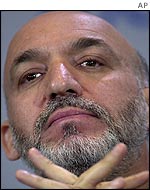
| | Monday, 2 December, 2002, 23:48 GMT Afghan national army plan unveiled 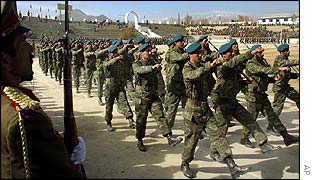 An effective national army is seen as vital Plans for a 70,000-strong national army for Afghanistan have been outlined by President Hamid Karzai. Mr Karzai told a meeting of United Nations representatives and donor countries in Germany that the safety of his citizens remained his top priority, and that the new army would be a force loyal solely to his government and the only legal army Afghanistan would recognise.
The creation of the new Afghan army will mean that all private militias will now be banned. The Afghan president also announced that four people connected to the leadership of the former Taleban Government have been arrested in south-western Afghanistan. Mr Karzai did not identify the suspects, but said the Taleban leader, Mullah Omar, was not among them. "We haven't yet found Mullah Omar, but we have information that he is alive and that he's around that part of the world," he said. Obstacles Mr Karzai's announcement came as the forces of rival warlords continued to clash in Afghanistan.
Correspondents say the regional fighting underlines Afghanistan's continuing instability and the central government's lack of control outside the capital, Kabul. The president admitted to delegates in the German city of Bonn that his authority in Afghanistan was limited as many of the country's warlords did not respect his leadership. Attempts to form a national army have been hampered by a lack of non-partisan army volunteers and problems with convincing Afghanistan's different ethnic factions on how much representation they should have in the army. Diplomats were given details of Mr Karzai's plans for his country's army of 70,000 troops, including:
So far, about 2,000 troops are reported to have received training from the United States. The army itself will be largely paid for by the US and British Governments. Mr Karzai said his government was also working to create a national police force, for which Germany is helping to train officers. Factional rivalry UN special envoy for Afghanistan Lakhdar Brahimi told the conference that insecurity - mostly generated by factional rivalry - was hampering reconstruction efforts.
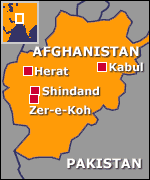
Mr Brahimi acknowledged that Mr Karzai's government did not have the resources to exercise its authority. The BBC's Baqer Moin says Western governments feel the only way to consolidate Mr Karzai's power is to ensure he has a military force at his disposal to assert the authority of his government. In western Afghanistan, the forces of ethnic Pashtun commander Amanullah Khan and the rival Tajik governor of Herat, Ismail Khan, pounded each other's positions for a third day near Shindand air base. Scores of villagers are reported to be fleeing the area - Zer-e-Koh, about 25 kilometres (15 miles) south of Shindand - amid heavy tank and artillery fire. On Sunday, a US B-52 bomber dropped seven 900-kilogram (2,000-pound) laser-guided bombs near the frontline of the fighting. Afghan needs The Bonn conference comes exactly a year after Afghan and international representatives signed accords establishing the Karzai government and a UN-led peacekeeping force in Kabul.
Afghan delegates estimate that at least $23bn will be needed over the next five years to rebuild the country's shattered infrastructure. As well as security issues, the conference is considering ways of developing financial and justice systems; drawing up a constitution; combating the drugs trade; investigating human rights abuses; and tackling the refugee problem. | |
See also:  02 Dec 02 | South Asia 01 Dec 02 | South Asia 05 Nov 02 | South Asia 15 Aug 02 | South Asia 03 Dec 02 | South Asia Internet links: The BBC is not responsible for the content of external internet sites Top South Asia stories now: Links to more South Asia stories are at the foot of the page. | ||||||||||||||||||||||||||||||||||||||||||||||||||||||||||||||||||||||||||||||||||||||||||||||||||||||||||||||||||||||||||||||||||||||||||||||||||||||||||||||||||||||||||||||||||||||||||||||||||||||||||||||||||||||||||||||||||
| |
|  E-mail this story to a friend E-mail this story to a friend |
| |
| Links to more South Asia stories |
| | | ||
 | ||||
 | | Back to top
| ||
| ---------------------------------------------------------------------------------- To BBC Sport>> | To BBC Weather>> | To BBC World Service>> ---------------------------------------------------------------------------------- © MMIII | News Sources | Privacy |