|
 |
 | | | | | | ||||||||||||||||||||||||||||||||||||||||||||||||||||||||||||||||||||||||||||||||||||||||||||||||||||||||||||||||||||||||||||||||||||||||||||||||||||||||||||||||||||||||||||
| | | You are in: South Asia | ||||||||||||||||||||||||||||||||||||||||||||||||||||||||||||||||||||||||||||||||||||||||||||||||||||||||||||||||||||||||||||||||||||||||||||||||||||||||||||||||||||||||||||||
|
| | Wednesday, 27 November, 2002, 13:42 GMT India's call centre boom 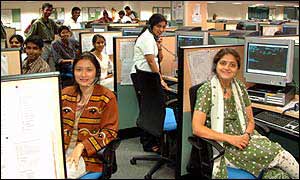 Graduates make Indian call centres highly competitive
British companies are making dramatic savings by shifting back-office work to India. Indian call centres handle a wide range of processing jobs from answering customer service calls and e-mails to telesales, credit demands and accounting.
They are seeing explosive growth of between 50% and 70% a year and claim that the economic slowdown in the West is just accelerating demand. The increasing trend is raising fears about the safety of British jobs among trade unions in the UK. And there is already concern about whether the Indian companies will be able to continue to find enough high calibre recruits to satisfy demand. Long-term shift Commentator Madan Mohan Rao sees this growth as the next global trend.
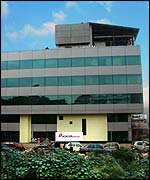
"The first was when low cost manufacturing shifted from the west to China, Malaysia and so on," he explains. "Now we're seeing the second wave, because of IT services, because of good telecommunications links, you can outsource a lot of the basic service and call centre jobs out of your country to other countries." And it's easy to see why. Thanks to modern telecoms, India can process the same work as UK call centres - with a saving of about 40%. The manager of ICICI OneSource, one of India's biggest call centres, argues that India's advantage is in terms of productivity. "The quality of the people we put in is graduates with experience, they perform better, so on matrix such as quality percentages we score higher," says Ganesh. In a smart downtown office in the southern Indian city of Bangalore dozens of Indian graduates work for ICICI OneSource. They answer the phone to customers in Britain calling about car insurance or cable TV. Culture coaching Youngsters like Jack Travis are paid much less than British call centre workers - but more than most Indian graduates. And it is considered high status here to work in an air-conditioned office.
Because he has never been to the UK, he also had a crash course in British culture. His course has taught him that "what English people like most is hitting the pubs". "They love horse racing and obviously football and the kind of food, that's puddings and fish and chips just to name a few," he says. The shift east is a controversial trend in the UK where British unions are battling to stop jobs leaving the country. And it has become so sensitive that Indian companies keep the names of their British clients top secret. But Jack could be the voice of the future. Staffing troubles One prediction is that by 2008, India will employ two million people as call centre operatives. The only obstacle to runaway growth may be finding enough high-standard recruits with good enough English to meet demand. Because the work is so repetitive, most employees leave within two years.
And the number of people applying is steadily falling. So recruiters are now looking beyond India's top cities in search of suitable graduates. The question is whether the English there will be good enough to maintain standards. | | See also:  01 Nov 02 | Business 30 Sep 02 | Business 19 Aug 02 | England 14 Aug 02 | Wales 16 Nov 00 | Business 20 Oct 00 | South Asia Top South Asia stories now: Links to more South Asia stories are at the foot of the page. | ||||||||||||||||||||||||||||||||||||||||||||||||||||||||||||||||||||||||||||||||||||||||||||||||||||||||||||||||||||||||||||||||||||||||||||||||||||||||||||||||||||||||||||
| |
|  E-mail this story to a friend E-mail this story to a friend |
| |
| Links to more South Asia stories |
| | | ||
 | ||||
 | | Back to top
| ||
| ---------------------------------------------------------------------------------- To BBC Sport>> | To BBC Weather>> | To BBC World Service>> ---------------------------------------------------------------------------------- © MMIII | News Sources | Privacy |