|
 |
 | | | | | | ||||||||||||||||||||||||||||||||||||||||||||||||||||||||||||||||||||||||||||||||||||||||||||||||||||||||||||||||||||||||||||||||||||||||||||||||||||||||||||||||||||||||||||||
| | | You are in: South Asia | ||||||||||||||||||||||||||||||||||||||||||||||||||||||||||||||||||||||||||||||||||||||||||||||||||||||||||||||||||||||||||||||||||||||||||||||||||||||||||||||||||||||||||||||||
|
| | Friday, 15 November, 2002, 10:05 GMT Q&A: Gujarat elections India's western state of Gujarat went to the polls on 12 December amid tight security. Gujarat was the scene of serious religious violence earlier this year in which more than 1,000 people were killed. 
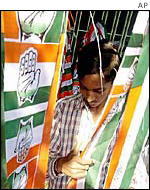
BBC News Online looks at some of the key issues surrounding the elections Why are these elections so important? They are being seen as a crucial test of the popularity of the Indian ruling party - the Bharatiya Janata Party (BJP). Gujarat is the last state in which the BJP has a majority in the state assembly, having lost control of a string of states this year. The BJP is hoping for victory in Gujarat in order to bolster its position nationally ahead of state elections in 2003 and general elections due by 2004. The opposition Congress Party will be looking to cement the gains it made in the recent elections in Kashmir where it emerged as the largest single party and has formed a coalition government. Will the elections be peaceful?
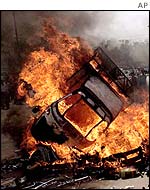
The Election Commission has said tens of thousands of paramilitary troops will be deployed during the polls in a bid to deter violence. It has also imposed a ban on all religious marches until the elections. Earlier in 2002, Gujarat was the scene of the most serious violence between Hindus and Muslims that India has witnessed for 10 years. In February, an attack on a train carrying Hindu activists in which almost 60 people died led to bloody communal violence - mostly directed against the state's Muslim population. Official figures suggest around 1,000 people died in the violence, but estimates by human rights groups suggest the real figure could be higher than 2,000. Hundreds of thousands of people were displaced from their homes and shifted to makeshift refugee camps. The elections will be a crucial test of communal relations in the state. The elections are also occurring at a time when many people remain displaced following the religious violence. Since August, the Election Commission has undertaken a revision of the electoral roll, but it admits that it has not been able to trace all those displaced during the violence. The commission has made special arrangements for polling booths to be set up near refugee camps and to arrange postal votes for those who sought shelter in other states. Why are they being held now? BJP Chief Minister Narendra Modi resigned in July to seek a fresh mandate. But India's independent Election Commission initially rejected calls by the BJP to hold elections, saying that conditions in the state were not back to normal after the religious violence. The Election Commission ruled in August that the situation in Gujarat "was not conducive for conduct of free and fair elections in the state". They said electoral rolls had become "substantially defective" due to the large-scale displacement of people. But in October, Chief Election Commissioner JM Lyngdoh announced that the polls would be held on 12 December. Who is taking part?
Other smaller parties will take part - but are not expected to win a substantial number of votes. Both leading candidates - the BJP's Narendra Modi and the Congress Party's Shankersingh Vaghela - have strong Hindu credentials. BJP Chief Minister Narendra Modi is a key ideologue of the Hindu right wing in India. He has been chief minister since October 2001. Leader of the Congress party in the state, Shankersingh Vaghela, has a background to rival Modi's. He is the former leader of the BJP in Gujarat and had a brief spell as a Congress-backed Chief Minister of Gujarat in 1997 after leading a palace coup against the BJP state government. In the past, Vaghela's strength is thought to have been his appeal to lower and middle-caste Hindus and the state's Muslim population. What are the main issues? BJP Chief Minister Narendra Modi will campaign on a Hindu nationalist and anti-terrorist ticket. He will hope that the Godhra attack in February - which sparked the months of religious violence - and the attack on a Hindu temple in Gandinagar in September will unite Gujarat's majority Hindu population behind him. Opposition parties and human rights groups strongly criticised Mr Modi during the religious violence on charges ranging from political inertia, slowness in controlling the violence to complicity in "ethnic cleansing" of the state's Muslims. The Congress Party called for his removal, accusing him of complicity in the violence. Congress is also likely to campaign hard on economic issues - making much of the economic consequences of the religious violence in Gujarat and of a scandal involving 15 co-operative banks in the state. | |
Internet links:  The BBC is not responsible for the content of external internet sites Top South Asia stories now: Links to more South Asia stories are at the foot of the page. | ||||||||||||||||||||||||||||||||||||||||||||||||||||||||||||||||||||||||||||||||||||||||||||||||||||||||||||||||||||||||||||||||||||||||||||||||||||||||||||||||||||||||||||||
| |
|  E-mail this story to a friend E-mail this story to a friend |
| |
| Links to more South Asia stories |
| | | ||
 | ||||
 | | Back to top
| ||
| ---------------------------------------------------------------------------------- To BBC Sport>> | To BBC Weather>> | To BBC World Service>> ---------------------------------------------------------------------------------- © MMIII | News Sources | Privacy |