|
 |
 | | | | | | ||||||||||||||||||||||||||||||||||||||||||||||||||||||||||||||||||||||||||||||||||||||||||||||||||||||||||||||||||||||||||||||||||||||||||||||||||||||||||||||||||||||||
| | | You are in: South Asia | ||||||||||||||||||||||||||||||||||||||||||||||||||||||||||||||||||||||||||||||||||||||||||||||||||||||||||||||||||||||||||||||||||||||||||||||||||||||||||||||||||||||||||
|
| | Friday, 18 October, 2002, 17:07 GMT 18:07 UK Two die in Bangladesh crime clean-up 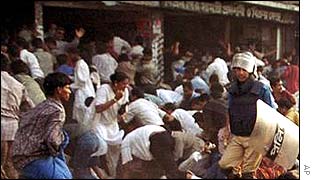 Law and order is a growing problem in Bangladesh
Family members of the victims complained the two men were tortured to death by members of the Bangladesh army during the government's massive anti-crime drive which started on Thursday. A Bangladeshi army source confirmed Yakub Ali and Jahangir Hossain, both supporters the ruling Bangladesh Nationalist Party (BNP), had died while being held by the security force.
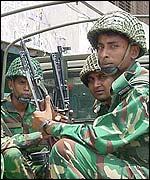
This is the first allegation of torture against the Bangladesh army since 40,000 of its troops were deployed to towns and cities across Bangladesh to take part in a massive security operation targeting criminals. Connected Nearly 1,300 people were arrested on the first day of the massive security operation, including some local level politicians accused of having links to criminal groups. Most of those alleged criminals and politicians arrested on Thursday are connected to the ruling Bangladesh National Party. The government sought the army's help to crack down on crime in the wake of a steady worsening of law and order. Supporters of the ruling party staged demonstrations against the arrests in different parts of the country, and one man was killed when soldiers opened fire on one of these protests in the northern town of Bogra. Supporters of the main opposition Awami League party also held demonstrations protesting against the arrest of their leaders. But a senior opposition leader Abdul Hamid said the Awami League did not object to the use of the army to fight crime. He warned, however, that the drive against crime would not yield positive results if the army was used to persecute the opposition. Massive operation Nearly 40,000 troops are taking part in this campaign. Every night smaller groups of army troops are conducting raids at possible criminal hideouts. During these raids, mobile telephone networks are shut down so that criminals can not pass any information between themselves.
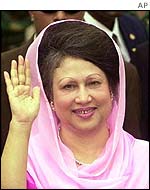
This is the first time the army has been used to deal with criminals under a democratically-elected government since the early 1970s. Prime Minister Khaleda Zia was under pressure from international donors and the business community to take immediate and effective steps to improve the situation. The government says the operation has been largely successful so far and that the army will stay on the streets until the law and order situation returns to normal. | | See also:  17 Oct 02 | South Asia 29 Apr 02 | South Asia 23 Apr 02 | South Asia 11 Mar 02 | South Asia 16 Feb 02 | South Asia 03 May 01 | South Asia Internet links: The BBC is not responsible for the content of external internet sites Top South Asia stories now: Links to more South Asia stories are at the foot of the page. | ||||||||||||||||||||||||||||||||||||||||||||||||||||||||||||||||||||||||||||||||||||||||||||||||||||||||||||||||||||||||||||||||||||||||||||||||||||||||||||||||||||||||
| |
|  E-mail this story to a friend E-mail this story to a friend |
| |
| Links to more South Asia stories |
| | | ||
 | ||||
 | | Back to top
| ||
| ---------------------------------------------------------------------------------- To BBC Sport>> | To BBC Weather>> | To BBC World Service>> ---------------------------------------------------------------------------------- © MMIII | News Sources | Privacy |