|
 |
 | | | | | | ||||||||||||||||||||||||||||||||||||||||||||||||||||||||||||||||||||||||||||||||||||||||||||||||||||||||||||||||||||||||||||||||||||||||||||||||||||||||||||||||||||||||||||||||||||||||||||
| | | You are in: South Asia | ||||||||||||||||||||||||||||||||||||||||||||||||||||||||||||||||||||||||||||||||||||||||||||||||||||||||||||||||||||||||||||||||||||||||||||||||||||||||||||||||||||||||||||||||||||||||||||||
|
| | Wednesday, 21 August, 2002, 15:10 GMT 16:10 UK Analysis: Musharraf sidelines parliament 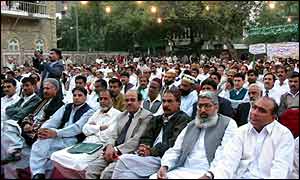 The opposition say the moves are unconstitutional
Pakistan's military-ruler General Pervez Musharraf has made history by introducing sweeping changes to the country's constitution. They were made by executive decree, leaving no provision for the next elected parliament to overturn them.
With the approval of MPs, they were made part of the constitution in the form of the eighth amendment. Role of the courts General Musharraf, however, says the Supreme Court, in validating his military coup of 12 October 1999, gave him the authority to bring about the necessary amendments.
The Supreme Court, his opponents argue, has neither the authority to amend the constitution, nor it can give that authority to any individual. But General Musharraf's prompt reply to his critics at a news conference on Wednesday was that such queries were not his concern. "I think you should ask the Supreme Court about this," he said, making it absolutely clear that with his decree the constitution stands amended. Long struggle General Musharraf's package of constitutional reforms is the result of nearly two decades of tussles over parliament's authority between the country's powerful military and mainstream political parties.
Initially, these powers were diluted as part of a compromise in 1985 when General Zia agreed to restore civilian rule provided the parliament agreed to transfer some powers to the president, including the authority to dissolve the national assembly. The same assembly, which had approved the constitutional changes, paid a heavy price when General Zia, in his capacity as the president, dissolved it in 1988. Later on, four more governments were sacked and elected assemblies dissolved by successive presidents under this controversial provision, known as article 58-2(b) of the constitution. Then, the last government of Nawaz Sharif moved the 13th amendment to take back this authority from the president, and it was passed by the parliament with a unanimous vote. National Security Council Mr Sharif's government also restored the powers of the prime minister to appoint the chiefs of the armed forces. However, General Musharraf's argument is that, had article 58-2(b) still been there in the constitution, the crisis of October 1999 would not have resulted in a military take-over. Hence, he has decided to restore this constitutional provision, and has also given the authority to the president to appoint the armed forces chiefs. In fact, he has gone a step further to make a fundamental change in the country's political system by introducing the concept of a supra-parliamentary body, the National Security Council. The NSC, with a strong military element, will be authorised to look into the country's security issues, and monitor the process of democracy and governance in the country. PMs banned On a more personal level, General Musharraf has introduced a specific clause in the constitution that will allow him to remain the country's president and chief of the army for another five years. Most of the other amendments deal with giving constitutional cover to the various economic and political reforms that the present military-run government has introduced in the last three years. And there are also two specific amendments that will in effect keep two former prime ministers, Benazir Bhutto and Nawaz Sharif, from returning to power. General Musharraf accepts the argument that some of these changes negate the internationally-recognised principles of parliamentary democracy. Row rages But according to him they are crucial for ensuring a stable democratic process in Pakistan's unique political environment. Critics of the present government disagree, and say because of the constant interference from the army, parliamentary democracy has never been allowed to flourish in the country. Besides, senior opposition politicians are convinced parliament, and only parliament, can change the consititution. They say that, President Musharraf's stand on the finality of these amendments notwithstanding, it will be for the next elected parliament to decide if the changes are acceptable. Argument over these controversial changes looks likely to continue up to and beyond the October elections. | |
See also:  20 Aug 02 | South Asia 05 Aug 02 | South Asia 12 Jul 02 | South Asia Internet links: The BBC is not responsible for the content of external internet sites Top South Asia stories now: Links to more South Asia stories are at the foot of the page. | ||||||||||||||||||||||||||||||||||||||||||||||||||||||||||||||||||||||||||||||||||||||||||||||||||||||||||||||||||||||||||||||||||||||||||||||||||||||||||||||||||||||||||||||||||||||||||||
| |
|  E-mail this story to a friend E-mail this story to a friend |
| |
| Links to more South Asia stories |
| | | ||
 | ||||
 | | Back to top
| ||
| ---------------------------------------------------------------------------------- To BBC Sport>> | To BBC Weather>> | To BBC World Service>> ---------------------------------------------------------------------------------- © MMIII | News Sources | Privacy |