|
 |
 | | | | | | ||||||||||||||||||||||||||||||||||||||||||||||||||||||||||||||||||||||||||||||||||||||||||||||||||||||||||||||||||||||||||||||||||||||||||||||||||||||||||||||||||||||||||||||||||||||||||||
| | | You are in: South Asia | ||||||||||||||||||||||||||||||||||||||||||||||||||||||||||||||||||||||||||||||||||||||||||||||||||||||||||||||||||||||||||||||||||||||||||||||||||||||||||||||||||||||||||||||||||||||||||||||
|
| | Thursday, 8 August, 2002, 09:03 GMT 10:03 UK Pakistan's election game 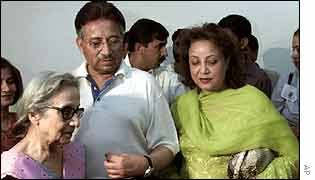 General Musharraf says he is strengthening democracy
But if the laws to ban them from a third term, or even from remaining the heads of their parties, were intended to diminish their influence over the country's politics, it has been an exercise in futility.
With the internal party elections required under the new laws now over, Pakistan's election process has entered its second phase. More than 70 parties, big and small, have complied with the new laws and submitted their party consitutions and the results of ballots to elect office bearers for inspection by the Election Commission. Now it is up to the commission to decide which of these parties fulfills the requirements and can be allotted a party symbol - essential in rural areas where illiteracy rates are high - for the coming elections. Old guard stay in place Because of the restrictions imposed under the new electoral laws, Nawaz Sharif opted out as the president of his Pakistan Muslim League, or PML-N.
Benazir Bhutto decided not to relinquish the post of chairperson of her Pakistan People's Party. Instead, a new entity by the name of the Pakistan People's Party Parliamentarians, or PPP-P, was set-up with her second-in-command, Makhdoom Amin Fahim, being elected as its head. Most of the other important parties also re-elected the same old leaders, many of them even without any real contest. So, if the idea of the exercise was to create some kind of democratic culture in the political parties - a claim made by the government in support of the new laws - it has not worked. Charisma And this is understandable. As in most other countries in South Asia, Pakistani politics are dominated by powerful personalities.
And the phenomenon is not just restricted to Sharifs or Bhuttos. Whether it's Imran Khan's Tehrik-e-Insaaf or former president Farooq Leghari's Millat Party, or even Altaf Hussain's MQM, they all revolve round their respective leaders. The next general election is likely to be dominated by these political personalities, and the results will depend on their ability to mobilise supporters through their charisma. Absences Perhaps the only difference in the October vote will be that some of these prominent personalities, presently living in exile, may not be able to return to the country to lead their parties into the elections.
The MQM's Altaf Hussain is living in exile in London, and is not expected to return to Pakistan in the near future. And even though Ms Bhutto keeps saying she intends to return home before the elections, so far the fear of getting arrested on charges of corruption has prevented her from doing so. This gives an added advantage to the pro-government parties. In fact, some analysts say the whole idea of introducing these new electoral laws was for this purpose alone. Now it will be interesting to see how senior politicians like Ms Bhutto or Mr Sharif play their cards to try to get back into the political mainstream. | |
See also:  05 Aug 02 | South Asia 04 Aug 02 | South Asia 03 Aug 02 | South Asia 24 Jul 02 | South Asia Internet links: The BBC is not responsible for the content of external internet sites Top South Asia stories now: Links to more South Asia stories are at the foot of the page. | ||||||||||||||||||||||||||||||||||||||||||||||||||||||||||||||||||||||||||||||||||||||||||||||||||||||||||||||||||||||||||||||||||||||||||||||||||||||||||||||||||||||||||||||||||||||||||||
| |
|  E-mail this story to a friend E-mail this story to a friend |
| |
| Links to more South Asia stories |
| | | ||
 | ||||
 | | Back to top
| ||
| ---------------------------------------------------------------------------------- To BBC Sport>> | To BBC Weather>> | To BBC World Service>> ---------------------------------------------------------------------------------- © MMIII | News Sources | Privacy |