|
 |
 | | | | | | |||||||||||||||||||||||||||||||||||||||||||||||||||||||||||||||||||||||||||||||||||||||||||||||||||||||||||||||||||||||||||||||||||||||||||||||||||||||||||||||||||||||||
| | | You are in: South Asia | |||||||||||||||||||||||||||||||||||||||||||||||||||||||||||||||||||||||||||||||||||||||||||||||||||||||||||||||||||||||||||||||||||||||||||||||||||||||||||||||||||||||||||
|
| | Monday, 29 July, 2002, 14:29 GMT 15:29 UK Analysis: Bangladesh's emotional scars 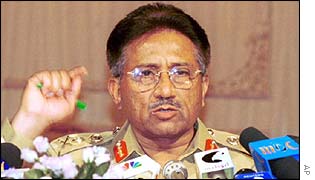 Musharraf's visit is politically significant
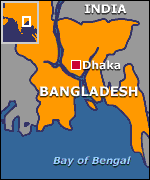
Pakistan's President Pervez Musharraf's three-day visit to Dhaka will highlight the sensitive nature of relations between the two countries.
Several Bangladeshi groups including the main opposition Awami League have said a "military dictator" who removed an elected government should not be received as a state guest. Although Dhaka gave the Pakistani leader a red-carpet welcome, its officials are keen to sound sufficiently nationalistic in their approach to what many Bangladeshis consider their former colonial tormentors. Bangladesh's Foreign Secretary Shamsher Mubin Chowdhury told the BBC that Dhaka would raise issues "on which there is discord, as well as those on which there is accord" during President Musharraf's visit. Bitter past Mr Chowdhury said successive Bangladeshi governments had sought the repatriation of so-called "stranded Pakistanis".
They are a 250,000-strong, Urdu-speaking community which has lived in miserable conditions in camps across Bangladesh since Pakistani forces surrendered in December 1971. The other difficult issue relates to Dhaka's demand for what it claims to be its share of national assets amounting to billions of dollars, held by Islamabad since 1971. These differences, however are unlikely to undermine the significance of President Musharraf's visit. Despite the bitter legacy of the civil war, Pakistani leaders have sought to cultivate friendly relations with Bangladesh, and other neighbours, since their country was reduced in both stature and capability in its perennial rivalry with the regional big power, India. General Musharraf is the fifth Pakistani head of government to visit Bangladesh, and his short break in Colombo on his way back from Dhaka, underscores the regional nature of this diplomatic exercise. Strategic relations Pakistani analysts acknowledge the value of these visits to Pakistan's diplomatic efforts to strengthen its hand in its competition with India. "Both countries are considered to be within the Indian sphere of influence, and a high-profile visit by a Pakistani president will not be liked by India," says Khalid Mahmood, a Pakistani political scientist. Although Bangladesh's foreign secretary says talks between President Musharraf and the Bangladeshi Prime Minister Khaleda Zia will focus on improving trade links, the strategic nature of relations is difficult to ignore. Islamabad gave several squadrons of F-6 fighter aircraft as a gift to the Bangladeshi air force in the late 1980s although most of these were destroyed in a cyclonic storm which hit coastal Bangladesh in 1991. Both Pakistan and Bangladesh are close allies of China and rely heavily on Chinese military equipment - they could be discussing further developing diplomatic and military collaboration. Unresolved questions Shared anxiety about Delhi's regional policies... is unlikely to remove entirely the bitterness born of the 1971 war. For many Bangladeshis, the vexed question of whether they are Bengali-Muslims or Muslim-Bengalis remains unresolved, and debates over identity are almost as bitter now as they were three decades ago.
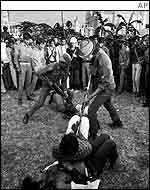
Influential sections of the Bangladeshi middle classes also hold Pakistan's military responsible for the death and destruction caused in the nine-month long civil war in which, Bangladeshis say, three million people were killed. Pakistan rejects the figure as a highly exaggerated claim, saying atrocities were committed by both sides in 1971. Estimates made in the early 1970s suggested that a third of Bangladesh's then-$10 billion-economy was destroyed or damaged in the war although foreign assistance received since then would have, if partially, compensated for this. But emotional scars heal less easily. Some opposition groups say as a Pakistani soldier in 1971, General Musharraf took part in Pakistan's violent response to Bangladesh's nationalist aspirations. Pakistani sources say General Musharraf commanded a Special Services commando unit in 1971 but was deployed in Pakistan rather than in Bangladesh. But these tensions may largely be allayed by President Musharraf's first official engagement in Dhaka - a symbolic visit to the national martyrs' memorial outside the capital. | | See also:  31 Dec 00 | South Asia 17 Dec 00 | South Asia 15 Dec 00 | South Asia 28 Nov 00 | South Asia 15 Sep 00 | South Asia 16 Dec 00 | South Asia 25 Jun 02 | Country profiles Internet links: The BBC is not responsible for the content of external internet sites Top South Asia stories now: Links to more South Asia stories are at the foot of the page. | |||||||||||||||||||||||||||||||||||||||||||||||||||||||||||||||||||||||||||||||||||||||||||||||||||||||||||||||||||||||||||||||||||||||||||||||||||||||||||||||||||||||||
| |
|  E-mail this story to a friend E-mail this story to a friend |
| |
| Links to more South Asia stories |
| | | ||
 | ||||
 | | Back to top
| ||
| ---------------------------------------------------------------------------------- To BBC Sport>> | To BBC Weather>> | To BBC World Service>> ---------------------------------------------------------------------------------- © MMIII | News Sources | Privacy |