|
 |
 | | | | | | |||||||||||||||||||||||||||||||||||||||||||||||||||||||||||||||||||||||||||||||||||||||||||||||||||||||||||||||||||||||||||||||||||||||||||||||||||||||||||||||||||||||||||||||||||||||||||||||||||
| | | You are in: South Asia | |||||||||||||||||||||||||||||||||||||||||||||||||||||||||||||||||||||||||||||||||||||||||||||||||||||||||||||||||||||||||||||||||||||||||||||||||||||||||||||||||||||||||||||||||||||||||||||||||||||
|
| | Thursday, 25 July, 2002, 17:56 GMT 18:56 UK Pashtuns demand greater role in Afghanistan 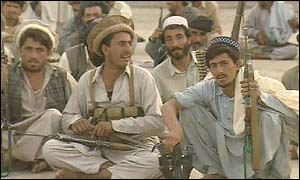 Tensions are rising among Pashtun tribes in Khost
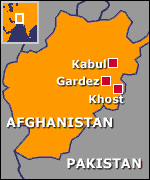
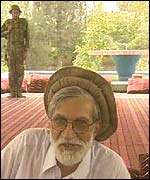
Young men in the Pashtun heartland of Khost train in martial arts. Their teacher, Mateen Khadem, is a Pashtun, a former mujahideen fighter and has thousands of students around Afghanistan. Last November he came here from Kabul to work with the tribes against the Taleban. But in the race to capture Kabul, they were the losers.
Meanwhile, the Pashtun tribes were expelling the Taleban and al-Qaeda fighters and establishing security. But possession has proved to be nine-tenths of the law. Northern Alliance commanders, particularly those from the Panjshir, remain dominant in the new transitional government. Pashtuns are the largest ethnic group and have ruled Afghanistan since its creation. But apart from the president, Hamid Karzai, there are very few of them in power. "Pashtuns are patient because 23 years of war destroyed everything and brought vulnerability to Afghanistan," said Mateen. "Pashtuns are peace-loving but if this lasts, they will do something."
The Pashtun tribes from this region have always been a force to be reckoned with. Their forefathers helped to expel the British from Afghanistan. They also defeated the only Tajik king in the modern era. It is difficult to find anyone in Khost who is happy with the new government. Only one minister comes from this entire region. And this is the only place I have been to where ordinary people speak about fighting. Tribes here have been making and breaking dynasties for centuries. People here say they feel unwelcome in Kabul. Officials do not speak Pashtu and if they wear traditional clothes and keep beards untrimmed, they are labelled Taleban.
Yet the Pashtuns of Khost are divided among themselves. Provincial Governor Hakim Taniwal works and meets US special forces in the provincial guest house. He recognises the ethnic imbalance in the new government, but believes that Pashtuns should submit to the central government. "Everyone wants their own right at the same time. We can't give it. We have to be patient." The current occupant of the governor's house is Padsha Khan Zadran and he refuses to move out.
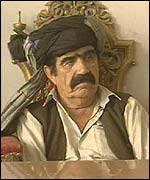
He controls the most powerful force in the province - 6,000 men built up through tribal allegiances and US dollars. And he has been a main ally in the fight against al-Qaeda and the Taleban around Khost - the first to raise the Afghan flag after their defeat over the governor's house. He has no official position but believes by right, he should be in control of the entire south-east. "Why are they humiliating Pashtuns?" he says angrily. "We're the majority. They placed Hamid Karzai at the top as a representative of Pashtuns. "But in reality he's no longer a Pashtun. He's sold himself out.
"He's a traitor. Pashtuns cannot sit around waiting. They will react and will claim their rights." Both of these Pashtun leaders have armed men in town and the conflict is simmering. A few lives have already been lost. Not far away, more men are dancing the Pashtun martial dance. But they are loyal to Governor Taniwal. They are his new force - a unified tribal militia. Six hundred men, mainly former mujahideen fighters, are being trained by professional officers, a legacy of the Soviet Union. This is the first provincial battalion of the national army all professing their allegiance to the governor and the president. They are often unruly, but if they want to, can become an efficient fighting force. These tribes have always been the king makers and the central government will ignore them at its peril. But Pashtuns are also faced with choices, to organise politically for general elections in two years or waste lives in factional fighting and take up arms for what they consider their rights. | |
See also:  01 Jun 02 | South Asia 19 May 02 | South Asia 20 Mar 02 | South Asia 13 Feb 02 | South Asia 31 Jan 02 | South Asia Internet links: The BBC is not responsible for the content of external internet sites Top South Asia stories now: Links to more South Asia stories are at the foot of the page. | |||||||||||||||||||||||||||||||||||||||||||||||||||||||||||||||||||||||||||||||||||||||||||||||||||||||||||||||||||||||||||||||||||||||||||||||||||||||||||||||||||||||||||||||||||||||||||||||||||
| |
|  E-mail this story to a friend E-mail this story to a friend |
| |
| Links to more South Asia stories |
| | | ||
 | ||||
 | | Back to top
| ||
| ---------------------------------------------------------------------------------- To BBC Sport>> | To BBC Weather>> | To BBC World Service>> ---------------------------------------------------------------------------------- © MMIII | News Sources | Privacy |