|
 |
 | | | | | | |||||||||||||||||||||||||||||||||||||||||||||||||||||||||||||||||||||||||||||||||||||||||||||||||||||||||||||||||||||||||||||||||||||||||||||||||||||||||||||||||||||||||||
| | | You are in: South Asia | |||||||||||||||||||||||||||||||||||||||||||||||||||||||||||||||||||||||||||||||||||||||||||||||||||||||||||||||||||||||||||||||||||||||||||||||||||||||||||||||||||||||||||||
|
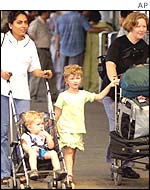
| | Sunday, 7 July, 2002, 17:25 GMT 18:25 UK Indian airlines start price war Security fears have hit airlines hard across the world
Travellers in India are set to reap the benefits of an enormous cut in air fares that makes flying only marginally more expensive than taking the train. Discounts of up to 64% on regular fares have been announced by leading domestic airlines in an attempt to kick-start the flagging flights market.
The offer, made initially on Saturday by the privately-run Jet Airways, was quickly followed by one from its main rival, the government-run Indian Airlines. New prices will come into effect during the customarily lean tourist period of August to October. A third airline, Sahara, which currently offers a discount of almost 50% at online auctions, is also considering slashing tickets bought over the counter during these months. And Air India, the country's flagship international carrier, says it is looking at "rationalising" its fares as a result of the price war. Plan well ahead
But Shilpa Kannan, a post-graduate student of journalism from the western city of Pune, doubts this will be a problem for those who know their travel schedules in advance. "My friends and I are currently in Delhi working as interns at various newspaper offices and we need to return to Pune by month-end," she told the BBC. "We had all booked seats on trains for that journey but now that this has happened, we have decided to book seats on planes instead! "I would have paid around 1230 rupees for a seat in an air-conditioned train but now with just a few hundred more I can actually fly, cutting down drastically on the number of hours I would have otherwise spent on the train." 'Overdue' The director of a Delhi-based travel agency, Prateek Chawla, is far less enthusiastic, however.
Mr Chawla agrees that the current move is aimed at countering the effects of warnings from the US and the UK to their citizens not to travel to the sub-continent. But he says the decision is intended mainly to entice the domestic traveller and will bring only short-term benefits. "The entire idea behind an advanced purchase scheme does not suit the average Indian temperament - most people who decide to travel in this country, do it on the spur of the moment, unlike the average Westerner who chalks out travel plans well in advance." Trains under pressure But he does concede that the price war will find a large number of frequent train travellers switch to flying, since the difference in rates is no longer too much. Analysts say the railways may now have to seriously consider bringing down their own rates to hold on to traditional customers. Estimates suggest that more than 13 million passengers a day use the country's railway network, the second largest in the world. But railway officials say that, although train passengers who travel by first class or air-conditioned class are likely to cross over, briefly, favouring journeys in the skies, this is a set-back that is necessarily temporary in nature. | | See also:  25 Jan 02 | Business 14 Jun 00 | South Asia 22 Nov 01 | Business 03 Sep 01 | Business Internet links: The BBC is not responsible for the content of external internet sites Top South Asia stories now: Links to more South Asia stories are at the foot of the page. | |||||||||||||||||||||||||||||||||||||||||||||||||||||||||||||||||||||||||||||||||||||||||||||||||||||||||||||||||||||||||||||||||||||||||||||||||||||||||||||||||||||||||||
| |
|  E-mail this story to a friend E-mail this story to a friend |
| |
| Links to more South Asia stories |
| | | ||
 | ||||
 | | Back to top
| ||
| ---------------------------------------------------------------------------------- To BBC Sport>> | To BBC Weather>> | To BBC World Service>> ---------------------------------------------------------------------------------- © MMIII | News Sources | Privacy |