|
 |
 | | | | | | |||||||||||||||||||||||||||||||||||||||||||||||||||||||||||||||||||||||||||||||||||||||||||||||||||||||||||||||||||||||||||||||||||||||||||||||||||||||||||||||||||||||||||||||||
| | | You are in: South Asia | |||||||||||||||||||||||||||||||||||||||||||||||||||||||||||||||||||||||||||||||||||||||||||||||||||||||||||||||||||||||||||||||||||||||||||||||||||||||||||||||||||||||||||||||||||
|
| | Wednesday, 5 June, 2002, 14:42 GMT 15:42 UK Joint patrol plan bogged down Both sides remain on a war footing
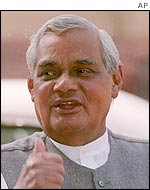
Indian Prime Minister Atal Behari Vajpayee has suggested that India and Pakistan might mount joint patrols to make sure there is no infiltration by Islamic militants into Indian-administered Kashmir across the Line of Control.
Mr Vajpayee floated the suggestion at the end of an Asian summit in Kazakhstan. He and the Pakistani President, General Pervez Musharraf, had traded angry words in public. Russian efforts to get a dialogue going got nowhere. Preconditions In the present atmosphere of bitter hostility, with a million troops glaring at each other across the border, the idea of Indians and Pakistanis cooperating in military patrols seems preposterous. Mr Vajpayee made it clear that a precondition was Pakistan ending its support, as he sees it, for cross-border terrorism and infiltration into Indian Kashmir.
And he also rejected the often-made Pakistani proposal for international monitors to verify that no infiltration was taking place. It was not practical in such mountainous terrain, Mr Vajpayee said, to allow a third country to do the job, and it was not necessary either. For good measure he repeated India's standard refusal to accept international involvement in resolving the Kashmir dispute itself. International pressure Pakistanis argue that India is afraid to put its case to the test. In suggesting joint patrols, Mr Vajpayee was responding to heavy international pressure and deep concern about a potentially disastrous war. He may have felt the need to show some flexibility, in itself perhaps a good sign, but he did not shift on fundamentals and what he proposed is unlikely to be a realistic option in the short term. | |
See also:  05 Jun 02 | South Asia 04 Jun 02 | Media reports 03 Jun 02 | South Asia 03 Jun 02 | South Asia 02 Jun 02 | South Asia 01 Jun 02 | South Asia 01 Jun 02 | South Asia 05 Jun 02 | South Asia Internet links: The BBC is not responsible for the content of external internet sites Top South Asia stories now: Links to more South Asia stories are at the foot of the page. | |||||||||||||||||||||||||||||||||||||||||||||||||||||||||||||||||||||||||||||||||||||||||||||||||||||||||||||||||||||||||||||||||||||||||||||||||||||||||||||||||||||||||||||||||
| |
|  E-mail this story to a friend E-mail this story to a friend |
| |
| Links to more South Asia stories |
| | | ||
 | ||||
 | | Back to top
| ||
| ---------------------------------------------------------------------------------- To BBC Sport>> | To BBC Weather>> | To BBC World Service>> ---------------------------------------------------------------------------------- © MMIII | News Sources | Privacy |