|
 |
 | | | | | | |||||||||||||||||||||||||||||||||||||||||||||||||||||||||||||||||||||||||||||||||||||||||||||||||||||||||||||||||||||||||||||||||||||||||||||||||||||||||||||||||||||||||||||||||||||||||||||||||||
| | | You are in: South Asia | |||||||||||||||||||||||||||||||||||||||||||||||||||||||||||||||||||||||||||||||||||||||||||||||||||||||||||||||||||||||||||||||||||||||||||||||||||||||||||||||||||||||||||||||||||||||||||||||||||||
|
| | Wednesday, 5 June, 2002, 11:30 GMT 12:30 UK Afghans prepare for the loya jirga The loya jirga will be the outcome of a complex process
Afghans are in the midst of choosing delegates for a loya jirga - or national assembly - which will meet in Kabul to chose a new head of state on 10 June.
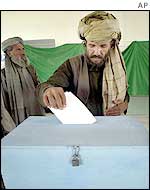
If all goes according to plan, there should be a more representative government after the loya jirga. But after 23 years of war, which made armed factions and their commanders extremely powerful, democracy is a struggle. "You should be confident," UN official Michael Semple says, "because this process is being monitored by the UN and by the independent loya jirga commission." Limited democracy The elections are being run in two stages. In the first stage local representatives are being chosen by popular acclaim.
"Most of them are coming through as local community leaders and there are some commanders pushing their way through," Mr Semple says, "but in the second stage it's a secret ballot." It is election day in the green valley of Ghorband to the north- west of Kabul. I am asking people who the candidates are. They answer in monosyllables - the local mujahideen commander and his associates - men who are allied to the defence minister's faction in Kabul. But one man speaks more frankly. He says the people want those who did not profit from the war to represent them. "The men who have power, they sit and have ideas between them, he says, "you can call on them to take ideas from all the people." State power Twenty three years of war, and then a grand alliance with the Americans against the Taleban, have given the armed factions the clout to try to rig the loya jirga.
For democrats, the national gathering in June with mainly elected representatives, is an opportunity to forge a different kind of Afghanistan. But it has also brought danger. I met a former fighter against the Soviet occupation and a clandestine activist against the Taleban, who has had to go into hiding. "Since elections started a month ago, in any corner of Afghanistan where the gun is dominant, the warlords have been threatening people," he says. "People asked me to be one of their candidates, but the armed men warned me not to stand - or they would kill me. In some cases, it seems the factions have been using state power to try to influence the vote. In the western city of Herat, some delegates have been arrested. And in Kabul, as one woman explained, many successful first round representatives have been summoned to intelligence departments and police stations - both controlled by the faction once loyal to the late commander Ahmed Shah Massood. Some choice "Not only us women, but men also, have been summoned again and again and asked who they're going to vote for and if they're going to stand.
"After so much questioning, some people in our area who would have stood as candidates and had local support, have dropped out of the second round," she says. A senior intelligence officer who did not want to be named, said at the start of this process, they had meetings telling their agents not to interfere in this process. Michael Semple of the UN says it feels like a battle is going on for every inch of Afghanistan. "We've had lots of money being given out as inducements," he said, "we've put word out to people, we prefer you not to take the money, but if you do, given that it's a free process, vote for whoever you want and enjoy the money." The loya jirga is also a cause of celebration - an opportunity for Afghans to at least struggle to get delegates they know and trust. And the fact that the armed factions are fighting so hard to get their people chosen suggests that the decisions of the loya jirga itself, are not yet fixed. | |
See also:  01 Jun 02 | South Asia 15 Apr 02 | South Asia 31 Mar 02 | South Asia 15 Apr 02 | South Asia 05 Dec 01 | South Asia 01 Oct 01 | South Asia 27 Sep 01 | South Asia Internet links: The BBC is not responsible for the content of external internet sites Top South Asia stories now: Links to more South Asia stories are at the foot of the page. | |||||||||||||||||||||||||||||||||||||||||||||||||||||||||||||||||||||||||||||||||||||||||||||||||||||||||||||||||||||||||||||||||||||||||||||||||||||||||||||||||||||||||||||||||||||||||||||||||||
| |
|  E-mail this story to a friend E-mail this story to a friend |
| |
| Links to more South Asia stories |
| | | ||
 | ||||
 | | Back to top
| ||
| ---------------------------------------------------------------------------------- To BBC Sport>> | To BBC Weather>> | To BBC World Service>> ---------------------------------------------------------------------------------- © MMIII | News Sources | Privacy |