|
 |
 | | | | | | ||||||||||||||||||||||||||||||||||||||||||||||||||||||||||||||||||||||||||||||||||||||||||||||||||||||||||||||||||||||||||||||||||||||||||||||||||||||||||||||||||||||||||||||||||||||||||||||||||||||||||||||||||||||||||||||||||||||
| | | You are in: South Asia | ||||||||||||||||||||||||||||||||||||||||||||||||||||||||||||||||||||||||||||||||||||||||||||||||||||||||||||||||||||||||||||||||||||||||||||||||||||||||||||||||||||||||||||||||||||||||||||||||||||||||||||||||||||||||||||||||||||||||
|
| | Monday, 27 May, 2002, 17:35 GMT 18:35 UK Musharraf defiant over Kashmir Musharraf's speech was broadcast across the nation President Pervez Musharraf has said Pakistan does not want war with India over the divided region of Kashmir, but is ready to respond with full force if attacked.
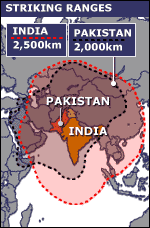
In a televised nationwide address, he accused India of creating "war hysteria" by blaming Pakistan for terrorist attacks and insisted there was no infiltration taking place across the Line of Control in Kashmir. He acknowledged that the tension between the two nuclear powers had arisen after terrorist attacks on the Indian parliament and in Indian-administered Kashmir, but he accused Delhi of over-reacting. The two sides have massed about a million men along their border and Indian Prime Minister Atal Behari Vajpayee has told his front-line troops to prepare for a "decisive fight". The BBC's Zaffar Abbas, in Islamabad, says General Musharraf's defiant tone is likely to annoy the United States and other Western countries which are trying to defuse the situation. The Indian Foriegn Ministry is to make an official response on Tuesday, but Junior Foreign Minister Omar Abdullah has said he thought elements of the speech would make India "very angry".
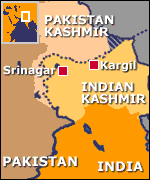
The address came after a weekend in which Pakistan tested two ballistic missiles thought capable of delivering nuclear warheads. "We are faced with a grave situation and we are standing at the crossroads of history," General Musharraf said. He said Pakistan would always support the struggle of the mainly Muslim Kashmiri people against Indian rule, but would not allow its territory to be used as a base for terrorism. "I want to tell the world and give the assurance that no infiltration is taking place across the Line of Control," he said. "But I want to make one thing clear. Liberation movement is going on in occupied Kashmir and Pakistan cannot be held responsible for any action against Indian tyranny and repression." Despite international pressure on him to further rein in Islamic groups, he announced no new measures against extremist groups and accused India of cruelty and atrocities in Kashmir. "Pakistan has taken very bold steps and initiatives, unfortunately we have not seen any positive response from the Indian side," General Musharraf said. Most of the speech was delivered in Urdu, but he switched to English when he spoke of Pakistan's stance on possible war. "We do not want war," he said. "But if war is thrust upon us, we would respond with full might, and give a befitting reply." Diplomatic visits The trading of artillery and small arms fire is reported to be intensifying across their international border and the Line of Control. The Indian army said one of its soldiers was killed and five villagers injured during heavy exchanges of fire across the line which divides Kashmir on Monday.
Russia's deputy foreign minister, who is visiting Islamabad on Monday, is expected to extend an offer by President Vladimir Putin to host face-to-face talks between General Musharraf and Mr Vajpayee at an Asian conference next month. The British Foreign Secretary, Jack Straw, is also expected to press for negotiations between the two countries when he arrives in Islamabad on Tuesday. Washington is sending Assistant Secretary of State Richard Armitage to the region next week. India began the military build-up after the attack on the federal parliament in Delhi last December. Tension rose again in mid-May after an attack on an army base in Kashmir in which more than 30 people died. General Musharraf also promised to hold parliamentary elections between 7-11 October. He took power in a 1999 military coup and won another five years as president last month in a controversial referendum. He has always promised to respect a Supreme Court ruling that demanded he hold elections and hand over power to a civilian government by October 2002. | |
See also:  27 May 02 | South Asia 27 May 02 | South Asia 27 May 02 | South Asia 27 May 02 | UK Politics 23 May 02 | South Asia 27 May 02 | South Asia Internet links: The BBC is not responsible for the content of external internet sites Top South Asia stories now: Links to more South Asia stories are at the foot of the page. | ||||||||||||||||||||||||||||||||||||||||||||||||||||||||||||||||||||||||||||||||||||||||||||||||||||||||||||||||||||||||||||||||||||||||||||||||||||||||||||||||||||||||||||||||||||||||||||||||||||||||||||||||||||||||||||||||||||||
| |
|  E-mail this story to a friend E-mail this story to a friend |
| |
| Links to more South Asia stories |
| | | ||
 | ||||
 | | Back to top
| ||
| ---------------------------------------------------------------------------------- To BBC Sport>> | To BBC Weather>> | To BBC World Service>> ---------------------------------------------------------------------------------- © MMIII | News Sources | Privacy |