
|
 |
 | | | | | ||||||||||||||||||||||||||||||||||||||||
| | You are in: World: South Asia | ||||||||||||||||||||||||||||||||||||||||||
 | | Thursday, 21 March, 2002, 14:34 GMT VHP plans threaten Delhi coalition 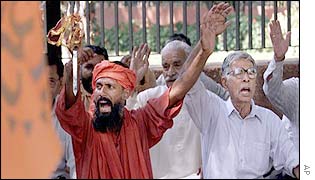 Hardliners are determined to pursue their plans Prime Minister Atal Behari Vajpayee's coalition government is under strain as partners threaten to leave unless Mr Vajpayee acts against hardliners of the Viswa Hindu Parishad (VHP).
The VHP has announced plans to travel across India with urns containing the ashes of Hindu activists whose death in a mob attack led to widespread rioting in the western state of Gujarat. The VHP is an ideological ally of the BJP but Mr Vajpayee's partners in the ruling National Democratic Alliance (NDA) are mainly centrist regional parties that abhor religious extremism. The VHP resents the government's decision to enforce a court order against holding religious rites at a disputed site in the northern town of Ayodhya where the VHP plans to build a temple. Its plan to criss-cross the country with the ashes is aimed at mobilising Hindu opinion in support of building a temple to the god Lord Rama where its activists razed a 16th century mosque in 1992. Secular fears The VHP's plans to embark on this 'asthi yatra' or bone-march is causing considerable anxiety among Mr Vajpayee's coalition partners.
They feel such a programme would be provocative and could lead to communal violence across India. "If this yatra, which will spread fire in the country, is not stopped, we will be forced to leave the coalition," said Samata Party leader Raghunath Jha. Other parties want Mr Vajpayee to take a stronger position against the VHP's plans, and assert his authority as the national leader. "We want to remind the government that this is an NDA government, not a government of the VHP," said Sudip Bandopadhyaya of Trinamul Congress, another BJP ally in the coalition. Man in the middle The dilemma of maintaining national calm and respecting long-cherished beliefs of ideological allies is straining the BJP-led coalition.
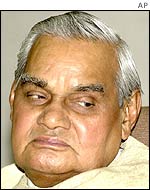
And the man most affected is Prime Minister Vajpayee, widely seen as the moderate face of India's Hindu nationalism. Mr Vajpayee has announced his determination to implement the court's orders regarding Ayodhya and this has cost him political support among hardline Hindus. But if he were to concede to the VHP's demands the alliance he leads could collapse and the country faced with serious disorder. There are some signs that the hardliners are using their plans as a lever to extract concessions from the government. "There could be major changes to the earlier plans because of political developments," said VHP leader Harish Bhat. Mr Bhat did not elaborate, and until he, or someone, does, many people in India will continue to worry about the stability of their country. | |

See also: Internet links: The BBC is not responsible for the content of external internet sites Top South Asia stories now:  Links to more South Asia stories are at the foot of the page. | ||||||||||||||||||||||||||||||||||||||||
|
Links to more South Asia stories |
 | | ^^ Back to top News Front Page | World | UK | UK Politics | Business | Sci/Tech | Health | Education | Entertainment | Talking Point | In Depth | AudioVideo ---------------------------------------------------------------------------------- To BBC Sport>> | To BBC Weather>> ---------------------------------------------------------------------------------- © MMIII|News Sources|Privacy  |




 66.79%
  33.21%
 E-mail this story to a friend