
|
 |
 | | | | | |||||||||||||||||||||||||||||
| | You are in: World: South Asia | |||||||||||||||||||||||||||||||
 | | Wednesday, 6 March, 2002, 14:17 GMT Burma's forgotten refugees 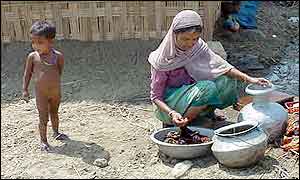 Bangladesh wants all the refugees to go home
It is 10 years ago this month that Muslim refugees from Burma began arriving in their thousands into Bangladesh.
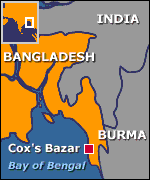
The refugees, known as Rohingyas, came from Burma's Arakan province to escape what they said was persecution by the military government. They say their land was confiscated and they were pressed into forced labour by the predominantly Buddhist Burmese authorities. By the end of 1992, about 250,000 had arrived in south-eastern Bangladesh, where the government placed them in more than 20 camps around the town of Cox's Bazar. Their number has dwindled to about 20,000, but those that remain say conditions are so poor, they are barely better than those they endured back in Burma. Abuse In Kutupalang camp, about 30km east of Cox's Bazar, it is not hard to see what they mean. Home to about to about 8,000 Rohingyas, the camp is guarded by armed policemen under orders not to allow outsiders to enter.
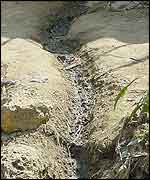
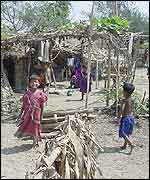
There is limited access to adequate sanitation - open drains are clearly visible - and many live in over-crowded and flimsy straw huts. Many appear malnourished, and all rely on the United Nations and aid agencies for their daily food handouts of rice. "We sometimes experienced serious torture in the camp and I have witnessed some terrible beatings," said Abdul, who arrived in Bangladesh from Burma in 1992. Like many other Rohingyas, he was repatriated to Burma in 1997 but fled back to Bangladesh two years later because of what he says was continued persecution. He said the abuses against refugees in the camps were mostly inflicted by fellow Rohingyas appointed by the Bangladeshi authorities to enforce discipline and maintain law and order. Persecution Another refugee, Hossain, said the Bangladeshi government and the United Nations refugee agency had forced many Rohingyas to return to Burma, even though most faced certain torture there.
Both organisations insist that no refugee has recently been made to return involuntarily. Hossain, who was a farmer back home, fled to Bangladesh in 1998. "Although conditions are tough here, they are not as bad as in Burma. There we were regularly tortured and oppressed, and denied even the right to practise our religion," he said. "Every time my rice crop was ready for harvest it would be confiscated by the Burmese military," he said. "They told us that as Muslims we had no rights there." Antagonism The relationship between the refugees and the local Bangladeshi community frequently reaches boiling point.
"They create lots of trouble here," said local journalist Umral Haq. "They are often involved in crime, even though it is difficult for many of them to leave the camps," he added. "They are believed to steal livestock from local farmers and have been accused of destroying the jungle so that they can get firewood." Some Rohingyas, however, have escaped the camps and are now blending into the local community. But with no sign of Burma agreeing to take back the last of the refugees, it looks as if the Rohingyas will be around the Cox's Bazar area for sometime to come. | |
See also:  Internet links: The BBC is not responsible for the content of external internet sites Top South Asia stories now:  Links to more South Asia stories are at the foot of the page. | |||||||||||||||||||||||||||||
|
Links to more South Asia stories |
 | | ^^ Back to top News Front Page | World | UK | UK Politics | Business | Sci/Tech | Health | Education | Entertainment | Talking Point | In Depth | AudioVideo ---------------------------------------------------------------------------------- To BBC Sport>> | To BBC Weather>> ---------------------------------------------------------------------------------- © MMIII|News Sources|Privacy  |




 E-mail this story to a friend