
|
 |
 | | | | | |||||||||||||||||||||||||||||
| | You are in: World: South Asia | |||||||||||||||||||||||||||||||
 | | Thursday, 28 February, 2002, 13:54 GMT Vajpayee's Ayodhya dilemma  The VHP have ignored Vaypayee's appeals
The sectarian violence in the Indian state of Gujarat has once again pushed India's Ayodhya row into the foreground and placed Prime Minister Atal Behari Vajpayee in a difficult position. Mr Vajpayee was already heading for a confrontation with the hardline Vishwa Hindu Parishad (VHP), an organisation with close ties to the prime minister's own Bharatiya Janata Party (BJP), over his refusal to give them the green light for their plans to build a temple in Ayodhya. Ever since Hindu zealots, led by groups such as the VHP, destroyed a 16th-Century mosque in the northern town of Ayodhya, Mr Vajpayee has sought to distance himself from their campaign. Critics, however, have argued that Mr Vajpayee has not reigned in more militant members of his own party who have openly tried to extract political mileage out of the campaign. Staying away The Indian prime minister has long been projected as the moderate face of the Hindu nationalist BJP.
When his close colleague - and now Home Minister - LK Advani led a 1992 campaign over the Ayodhya issue, an exercise which culminated in the destruction of the mosque by Hindu mobs, Mr Vajpayee chose to stay away. In an interview with the BBC's Hindi service, he condemned the act and was later to describe it as a sad day for India. But Mr Vajpayee has also had to walk a tightrope between hardline elements in his own party - who have close links to the VHP - and more moderate opinion. It is a battle that not many think he can win. Shifting positions Last year, Mr Vajpayee was roundly criticised when he described the plan for the temple as "an expression of national sentiment". His reputation as a moderate Hindu leader was seen as a "mask" which had come off.
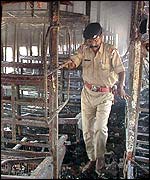
Others saw it as a cynical attempt to win the votes of the BJP's traditional right-wing supporters ahead of elections in the politically influential state of Uttar Pradesh. His comments alarmed his political allies in government who saw it as a deviation from the coalition's secular agenda. Mr Vajpayee, for his part, refused to back down and said his comments had been misinterpreted. He also rejected opposition demands to drop three ministers, including Mr Advani, who face charges of inciting the mob which destroyed the mosque. Coming to a head But with the dispute locked up in a bitter court battle, the VHP has now threatened to take matters into their own hands, bringing it into direct conflict with the government. In his first reaction to Wednesday's fatal train attack, Mr Vajpayee described it as a worrying development and simultaneously appealed to the VHP to back down from their campaign. But his appeal has been rejected by the VHP who say they will continue with plans to begin constructing a temple on the site of the demolished mosque beginning on 15 March. With time running out, all eyes are on the prime minister. But the hardline Hindu groups have a powerful and influential presence within the BJP, providing it with a crucial support base, and it is not clear how far the prime minister will be able to go to curb them. | |
See also:  Internet links: The BBC is not responsible for the content of external internet sites Top South Asia stories now:  Links to more South Asia stories are at the foot of the page. | |||||||||||||||||||||||||||||
|
Links to more South Asia stories |
 | | ^^ Back to top News Front Page | World | UK | UK Politics | Business | Sci/Tech | Health | Education | Entertainment | Talking Point | In Depth | AudioVideo ---------------------------------------------------------------------------------- To BBC Sport>> | To BBC Weather>> ---------------------------------------------------------------------------------- © MMIII|News Sources|Privacy  |




 E-mail this story to a friend