
|
 |
 | | | | | |||||||||||||||||||||||||||||||||||||||||||||||
| | You are in: World: South Asia | |||||||||||||||||||||||||||||||||||||||||||||||||
 | | Tuesday, 13 November, 2001, 17:58 GMT Afghan neighbours look to the future
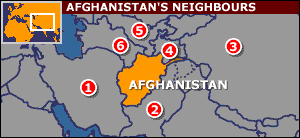
Click on a number on the map to see entry The six states which border Afghanistan have distinct political and economic interests in the country's post-Taleban administration, and their differences - particularly those between heavyweights Iran and Pakistan - may further complicate the task of establishing a new broad-based government in the war-torn country.
Against this background, the country has opted to support and supply the Northern Alliance, the multi-ethnic opposition force which includes the Shia Hezb-i-Wahdat militia group, representing Afghanistan's significant Shia minority. Iranian leaders have yet to make clear their exact position on post-Taleban political arrangements, but have indicated they would be content with an interim Northern Alliance administration before a broader government is established. But Iran has opposed suggestions from other states that more moderate members of the Taleban should be invited to join a new administration. It has also expressed discomfort over the possibility of an administration led by exiled former King Zahir Shah, a member of the same ethnic Pashtun group as the Taleban. It is thought this is because the former king is backed by the United States, sparking fears that he would bring western influence into play in the region.
It wants to see the international community come up with a broad-based government which will include representatives of the Pashtun community as quickly as possible. This may also mean the inclusion of some members of the Taleban. Pakistan has backed the US-led action against Afghanistan, and the West has been anxious to keep the country on board in the course of the campaign. As a result of his support, Pakistani President Pervez Musharraf has had to deal with occasionally violent protests sponsored by pro-Taleban Islamic groups. Major riots have occurred, but not on the scale predicted by many. However, members of militant groups have warned that the fall of Kabul to the Northern Alliance could have grave implications for the country.
Tajikistan has experienced its own bloody civil war involving government and militant Islamic forces, and has been seeking to stamp out movements such as Khizbi Tahrir, which originated in Taleban-held areas of Afghanistan. The country has also been under consistent pressure to allow across the border thousands of Afghan refugees who have fled the fighting between opposition and Taleban forces. But it has rejected such appeals on the grounds that it is lacking the resources to provide aid. The country is itself facing a famine which could destabilise its fragile power-sharing government.
Economically, Turkmenistan relies heavily on income from gas and oil resources, but has failed to capitalise on the huge reserves it harbours. Its current pipeline routes run through Russia, thus limiting Turkmenistan's exports to more lucrative Western markets. The country therefore has a huge vested interest in the return of stability to the country, whatever form that may come in. | |
See also:  Internet links: The BBC is not responsible for the content of external internet sites Top South Asia stories now:  Links to more South Asia stories are at the foot of the page. | |||||||||||||||||||||||||||||||||||||||||||||||
|
Links to more South Asia stories |
 | | ^^ Back to top News Front Page | World | UK | UK Politics | Business | Sci/Tech | Health | Education | Entertainment | Talking Point | In Depth | AudioVideo ---------------------------------------------------------------------------------- To BBC Sport>> | To BBC Weather>> ---------------------------------------------------------------------------------- © MMIII|News Sources|Privacy  |







 E-mail this story to a friend