By Rebecca Morelle
Science reporter, BBC News, York |

 | Creating an average face aided recognition 
|
Security and surveillance efforts could be bolstered by a simple imaging tool, a scientist claims. Currently, both people and computers are poor at recognising a person's face, especially if it is unfamiliar.
But a University of Glasgow researcher says merging multiple images of an individual to create their "average" face makes the task much easier.
Speaking at the BA Festival of Science, York, he said the technique could one day be used for passports or ID cards.
Rob Jenkins explained: "There has been a tremendous expansion in security and surveillance efforts in the last few years, especially in the wake of 9/11.
"And part of this surveillance is dedicated to face recognition: digital passport photos; the planned ID cards; CCTV coverage, etc."
However, he said, studies had shown that humans and computers could not reliably match people's faces or pictures of their faces to other images of the same person.
For example, when the scientists presented volunteers with six different images of himself and six different images of a friend, most could not successfully identify which face was which.
He said: "It is really difficult with a face you are unfamiliar with to tell whether it is one person or another person.
"The reason is that photos of different people can be more similar than photos of the same person."
However, Dr Jenkins said that when we are presented with images of familiar people our recognition skills became much better and he had used this idea to create his software.
'Essence' of a face
He said: "Familiarity with the face seems to be a natural consequence of exposure to that face - the more you see it, the more familiar you become with it.
"So we have been trying to explore the idea that we can combine different looking images of the same person to extract the 'essence' of that face, and see if that essence is beneficial in terms of face recognition."
Dr Jenkins' computer program takes multiple images of faces - the minimum needed is 12 - and combines them to form an "average" face.
| Can you spot the difference between Dr Jenkins (L) and his friend Dom (R)?
|
He said: "It gets rid of information that is unhelpful or misleading: lighting, expressions and pose, while preserving information that is consistent from photo to photo. "Basically, it is getting rid of the information you don't want and consolidates information that you do want."
He said that his studies had showed that volunteers were much better at matching an average face to another face compared with when they were using a single photo.
Failure to recognise faces is problematic when it comes to checking passports or ID cards, Dr Jenkins said; but the use of these composite images could help.
He said that the technique would be fairly easy to roll out, if further results confirmed its success.
He explained: "One of the appeals of this approach is with these average images, we are dealing with the input to the system not the system itself, so this is something compatible with existing systems."
He added that he was getting "promising results" for computer recognition of the average faces.


 One-Minute World News
  News services


 E-mail this to a friend
  Printable version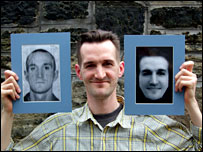
 More details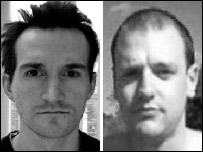


Bookmark with:
What are these?