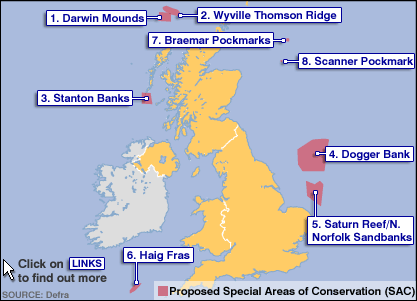
Britain's seas and marine life are set to benefit from increased protection as the government publishes its Marine Bill. To find out more about the areas covered, use the clickable map above.
1. Darwin Mounds - Described by Defra as "an exceptional example of cold coral reefs" in the form of hundreds of mounds known as "sand volcanoes" with cold-water corals at their summits.
The Darwin Mounds is already a candidate SAC and protected but the area needs to be formally designated under the new Offshore Marine Conservation Regulations.
2. Wyville Thomson Ridge - separates the warmer water of the North Atlantic from the cold bottom waters of the Arctic. Due to its position on the edge of the continental shelf, its depth and other marine influences, it supports a range of fauna.
3. Stanton Banks - mainly an area of rock peaks in the Malin Sea and an excellent example of bedrock mounds in offshore waters on the open Scottish continental shelf. Home to coralline red algae, barnacles, brittlestars and sea urchins.
4. Dogger Bank - supports an invertebrate community of sandy sublittoral (living near the shore) organisms including Polychaetes.
5. Saturn Reef- a living reef formed by the tube-building worm Sabellaria spinulosa. One of two of the most developed of five known areas of well-developed Sabellaria spinulosa reef in UK waters. The other is North Norfolk Sandbanks described as "the most extensive example of the offshore linear ridge sandbank type in UK waters", it supports invertebrates and is an important spawning ground and nursery for some commercial species.
6. Haig Fras - an isolated bedrock reef in the form of an offshore bank with a steep peak considered a unique feature in the south-west with excellent biological and physical structure.
7. Braemar Pockmarks - pockmarks are shallow seadbed depressions. Here, they are seeping methane gas and could contain bacteria of interest to scientists and provide a potentially favourable, sheltered habitat for various marine organisms.
8. Scanner Pockmark - a 20-metre deep depression seeping methane gas and the only known habitat of the gutless nematode Astononema southwardorum. It could contain bacteria of interest to scientists.


 One-Minute World News
  News services


 E-mail this to a friend
  Printable version


