 | Wandering weed 
|
Britain's barnacles, limpets and seaweeds are moving north and east in response to climate change. A four-year research project, funded by a number of government agencies, mapped 57 species across the British Isles.
Comparing current sightings with data from 50 years ago shows that many have moved, some by over 100 miles (150km).
The finding follows other studies showing that many marine creatures including some fish and plankton, but not all, are shifting northwards.
The project, called Marine Biodiversity and Climate Change (MarClim), is co-ordinated by the Marine Biological Association (MBA) based in Plymouth.
Footprints
Species found by MarClim to be on the move include:
- the toothed and flat topshells (Osilinus lineatus and Gibbula umbilicalis) which have moved into the colder waters of north-east Scotland
- the china and black-footed limpets (Patella ulyssiponensis and depressa) which have migrated eastward along England's south coast
- a brown seaweed (Alaria esculenta) nicknamed "dabberlocks" which is being replaced along the south coast by another species, Bifurcaria bifurcata
"We've seen many of these species moving from the areas they are normally found, mainly due to rising sea surface temperatures," said Larissa Naylor of the Environment Agency.
 The flat topshell is finding new homes in north-east Scotland |
"The creatures are moving to find more suitable homes in new locations. "It shows marine species can more readily extend their distribution ranges in order to survive the unavoidable impacts of climate change, compared with terrestrial counterparts."
In some cases the shifts have also been facilitated by other factors, such as the spread of coastal defences along the south coast which provides habitat for limpets, anemones and barnacles.
The concern has been that swiftly rising temperatures could impact on wildlife by putting strains on different aspects of their lives.
For example, they might need to be in one area to find prey but in another to breed.
So the next step would be to look at the impact of climatic change on whole ecosystems. Scientists are planning a project called IndiRock which will do just that, if funding can be secured.
"IndiRock will also track invasive species around the British coastline," said MBA's Nova Mieszkowska, "and survey the French coast of the English Channel to ascertain which warm-water species have the potential to invade the continent, and where and when it could occur."


 One-Minute World News
  News services
 E-mail this to a friend
  Printable version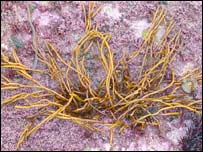
 Enlarge Image


