By Helen Briggs
BBC News science reporter |

 | The silver-spotted skipper is back (Image: Jim Ash) 
|
The recovery in Britain of a rare butterfly offers a glimmer of hope for other species, say conservationists. The silver-spotted skipper, which lives on the chalky down lands of southern England, is starting to thrive again after almost dying out in the 1980s.
It is among 15 butterflies that have become more widespread in the British Isles, according to the latest count.
However, the majority of butterflies are still in decline, says a report by the UK charity Butterfly Conservation.
The State of Butterflies in Britain and Ireland gives the latest data on the number and distribution of all 59 butterfly species that breed regularly in the UK and Ireland.
It shows that more than three-quarters of species have suffered a decline since the 1970s.
Overall, numbers of several species are down by more than two-thirds, with butterflies dependent on particular habitats faring worst.
However, there are some success stories, notably the resurgence of the silver-spotted skipper.
 The book maps the distribution of all 59 butterfly species |
Agri-environment schemes, where farmers are paid money to preserve habitat, were partly responsible, said Dr Tom Brereton, head of monitoring at Butterfly Conservation.
"There has been a lot of effort in recent years to bring down land back into a favourable state for wildlife and this is one of those species that has benefited," he said.
"I think also the warming climate has benefited the butterfly as well."
Other butterflies that have done well - spreading northwards as the climate gets warmer - include the Essex skipper, comma, holly blue and speckled wood.
Butterflies in Scotland are generally faring better than those in England and Wales, with some expanding their range.
However, the destruction and deterioration of habitats remains a major threat to butterflies, says the report, as does climate change.
Although most responses have been favourable thus far, predictive modelling suggests that climate change will become a significant cause of butterfly decline during this century, the report states.


 One-Minute World News
  News services


 E-mail this to a friend
  Printable version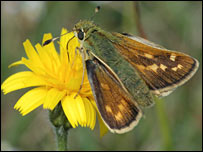
 Enlarge Image
