|
 |
 | | | | | | ||||||||||||||||||||||||||||||||||||||||||||||||||||||||||||||||||||||||||||||||||||||||||||||||||||||||||||||||||||||||||||||||||||||
| | | You are in: Science/Nature | ||||||||||||||||||||||||||||||||||||||||||||||||||||||||||||||||||||||||||||||||||||||||||||||||||||||||||||||||||||||||||||||||||||||||
|
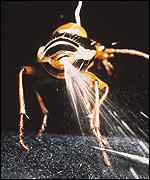
| | Tuesday, 17 August, 1999, 12:25 GMT 13:25 UK Bull's-eye beetle  The spray comes out at 100 C It is one of nature's hot shots. The African bombardier beetle can turn its heavy artillery in virtually any direction and hit the target with extreme accuracy. The ammunition is impressive too: A boiling hot, toxic fluid that lets off a loud bang on detonation.
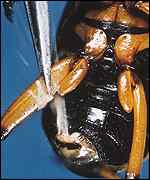
The beetle needs such sophistication because of its vulnerability on the ground. Unlike flies, butterflies, dragonflies and many other insects, the beetle cannot take instantly to the air when under attack from a predator, usually ants. It has to unfurl its wings first from beneath their covers and the discharable glands buy the creature time to get airborne. 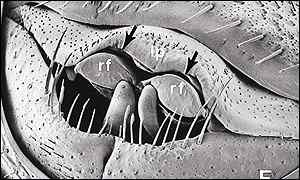 Two deflectors are used to direct the spray The photographs show the beetles curling and revolving their abdominal tips to spray their different body parts and even specific segments of individual appendages that have been pinched or poked with fine-tipped forceps. Close-up images of females reveal a pair of shield-like deflectors near the opening of the abdominal tip that are used one at a time to control the direction of the spray. Male beetles use a single deflector.
The precursor chemicals have to be stored separately in the beetle's abdomen because they combine explosively when brought together. This explains how the resulting quinones are ejected at high speed and at such a high temperature (100 C). Indeed, when all guns are blazing, this creature is literally too hot to handle. This, the researches say, raises an interesting question: If the beetle can target even regions on its own body, how does it withstand the heat and irritation that comes from the spray. 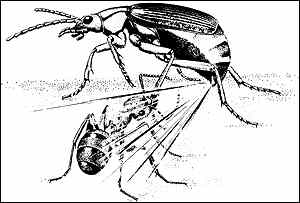 The defence mechanism keeps ants at bay The study was conducted by Thomas Eisner and Daniel Aneshansley. | | See also:  28 Jul 99 | Science/Nature Internet links: The BBC is not responsible for the content of external internet sites Top Science/Nature stories now: Links to more Science/Nature stories are at the foot of the page. | ||||||||||||||||||||||||||||||||||||||||||||||||||||||||||||||||||||||||||||||||||||||||||||||||||||||||||||||||||||||||||||||||||||||
|  |
|  E-mail this story to a friend E-mail this story to a friend |
 | |
| Links to more Science/Nature stories |
| | | ||
 | ||||
 | | Back to top
| ||
| ---------------------------------------------------------------------------------- To BBC Sport>> | To BBC Weather>> | To BBC World Service>> ---------------------------------------------------------------------------------- © MMIII | News Sources | Privacy |