|
 |
 | | | | | | ||||||||||||||||||||||||||||||||||||||||||||||||||||||||||||||||||||||||||||||||||||||||||||||||||||||||||||||||||||||||||||||||||||||||
| | | You are in: Science/Nature | ||||||||||||||||||||||||||||||||||||||||||||||||||||||||||||||||||||||||||||||||||||||||||||||||||||||||||||||||||||||||||||||||||||||||||
|
| | Thursday, 16 January, 2003, 23:19 GMT Flap over dino flight origins
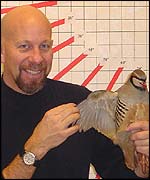
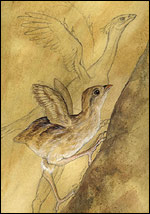
According to a US scientist, flight may have evolved in two-legged dinosaurs that flapped their feathered fore-limbs to climb slopes. They eventually developed true wings and became flying birds, says Kenneth Dial of the University of Montana. The idea is based on a study of the habits of modern flightless birds, which beat their wings to scurry up hills and get away from predators. It turns out that the physics of this sort of flapping motion is different from that of aerial flight. Foot traction Professor Dial says it helps push the birds' feet against the slope, thus improving traction - in the same way that spoilers work on a racing car.
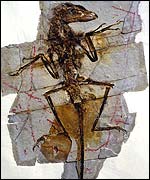
Even chicks with downy fluff were better at getting up steep slopes than those whose flight feathers had been trimmed or removed. By modifying these wing movements, birds or their ancestors - the dinosaurs - may have been able to launch themselves into the air. Fossils show that some dinosaurs had feathered fore-limbs but were unable to fly - something that has puzzled palaeontologists.
"It turns out the proto-wings - precursors to wings birds have today - actually acted more like a spoiler on the back of a race car to keep the animal sure-footed even while climbing up nearly vertical surfaces." Rival theories Professor Dial believes that what he calls wing-assisted incline running was first seen in prehistoric times. But the idea is likely to ruffle a few feathers. There has been heated debate about how dinosaurs learned to fly. One camp believes ground-dwellers grew feathers that helped them run faster and eventually become airborne.
Dr Angela Milner, a dinosaur expert at London's Natural History Museum, says the latest theory is a "third way". "The work adds a new dimension to the whole debate on how flight evolved," she told BBC News Online. "A predator escape mechanism using wing-assisted incline running fits with what we see in the fossils." The research is published in the journal Science. Professor Dial's theory is featured in an on-going exhibition, Dino Birds, the feathered dinosaurs of China, at London's Natural History Museum. | | See also:  17 Jul 02 | Science/Nature 23 Nov 00 | Science/Nature 06 May 99 | Science/Nature 22 Jun 00 | Science/Nature 14 Aug 00 | Science/Nature Internet links: The BBC is not responsible for the content of external internet sites Top Science/Nature stories now: Links to more Science/Nature stories are at the foot of the page. | ||||||||||||||||||||||||||||||||||||||||||||||||||||||||||||||||||||||||||||||||||||||||||||||||||||||||||||||||||||||||||||||||||||||||
 | |
|  E-mail this story to a friend E-mail this story to a friend |
| |
| Links to more Science/Nature stories |
| | | ||
 | ||||
 | | Back to top
| ||
| ---------------------------------------------------------------------------------- To BBC Sport>> | To BBC Weather>> | To BBC World Service>> ---------------------------------------------------------------------------------- © MMIII | News Sources | Privacy |




 The work adds a new dimension to the whole debate on how flight evolved