|
 |
 | | | | | | ||||||||||||||||||||||||||||||||||||||||||||||||||||||||||||||||||||||||||||||||||||||||||||||||||||||||||||||||||||||||||||||||||||||||||||||||||||||||||||||||||||||||||||||||
| | | You are in: Science/Nature | ||||||||||||||||||||||||||||||||||||||||||||||||||||||||||||||||||||||||||||||||||||||||||||||||||||||||||||||||||||||||||||||||||||||||||||||||||||||||||||||||||||||||||||||||||
|
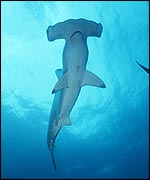
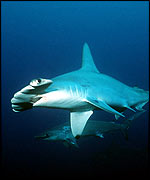
| | Thursday, 16 January, 2003, 23:24 GMT Alert over vanishing sharks  This scalloped hammerhead breeds slowly, like most sharks
The populations of some sharks have fallen to less than a quarter of their former size. With sharks high in the marine food chain, there is concern their fate may affect other creatures.
The scientists, from Dalhousie University, Nova Scotia, Canada, report their findings in the magazine Science. They analysed catch data in the north-west Atlantic for six oceanic species from 1986 (and for a further three, including coastal sharks, from 1992) to 2000. They say: "We estimate that all recorded shark species, with the exception of makos, have declined by more than 50% in the past 8 to 15 years." Unsustainable losses While fish like cod and haddock can reproduce fairly fast, possibly by up to 30-40% a year, sharks breed much more slowly. Some take 15 years or longer to reach sexual maturity, and many have a long gestation period.
Many sharks have an annual replacement rate of only 3-4%, too low to make good the losses they are sustaining. The Dalhousie team report a number of individual species' loss rates from 1986 to 2000:
They write: "Our results show that overfishing is threatening large coastal and oceanic sharks in the north-west Atlantic. "The large and rapid declines we document are in addition to substantial historical reductions. "Overexploitation of elasmobranchs (sharks, skates and rays) is known to have already nearly eliminated two skate species from much of their ranges. Moving the problem "The magnitude of the declines estimated here suggests that several sharks may also now be at risk of large-scale extirpation." The authors used models to analyse the implications of large-scale marine reserves for shark conservation, and say the results show that reserves "can indirectly cause harm if fishing effort is merely displaced".
"Emphasis on single-species conservation, without controlling effort, simply shifts pressure from one threatened species to another and may actually jeopardise biodiversity." Dr Rachel Cavanagh is programme officer for the shark specialist group of the World Conservation Union (IUCN). Warning sign She told BBC News Online: "The outlook for sharks is bleak worldwide. And the north-west Atlantic and Australia are probably the best-studied and best-managed shark areas there are. "If we're looking at massive declines there, it's going to be as bad or even worse in other areas." Clive James, of the UK's Shark Trust, told BBC News Online: "These findings are very much in line with what we're hearing from elsewhere. "Because of their slow breeding rates, sharks are biologically unable to withstand even a limited amount of exploitation, let alone what they're facing now. "The problem is simple, straightforward over-exploitation. There's a real danger some species will become extinct if we do not act." Images copyright and courtesy of Philip Colla/OceanLight.com | |
See also:  13 Nov 02 | Science/Nature 11 Sep 02 | Science/Nature 06 Sep 02 | Wales 23 Jul 02 | Asia-Pacific 26 Apr 02 | Science/Nature Internet links: The BBC is not responsible for the content of external internet sites Top Science/Nature stories now: Links to more Science/Nature stories are at the foot of the page. | ||||||||||||||||||||||||||||||||||||||||||||||||||||||||||||||||||||||||||||||||||||||||||||||||||||||||||||||||||||||||||||||||||||||||||||||||||||||||||||||||||||||||||||||||
 | |
|  E-mail this story to a friend E-mail this story to a friend |
| |
| Links to more Science/Nature stories |
| | | ||
 | ||||
 | | Back to top
| ||
| ---------------------------------------------------------------------------------- To BBC Sport>> | To BBC Weather>> | To BBC World Service>> ---------------------------------------------------------------------------------- © MMIII | News Sources | Privacy |






 The outlook for sharks is bleak worldwide