|
 |
 | | | | | | ||||||||||||||||||||||||||||||||||||||||||||||||||||||||||||||||||||||||||||||||||||||||||||||||||||||||||||||||||||||||||||||||||||||||||||||||||||||||||||||||||||||||||||||||||||||||
| | | You are in: Science/Nature | ||||||||||||||||||||||||||||||||||||||||||||||||||||||||||||||||||||||||||||||||||||||||||||||||||||||||||||||||||||||||||||||||||||||||||||||||||||||||||||||||||||||||||||||||||||||||||
|
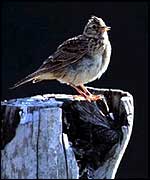
| | Wednesday, 15 January, 2003, 05:08 GMT GM crops 'will help wildlife'  Brighter prospects for farmland birds - or a false dawn?
They say their work is the first to show there can be environmental benefits from GM strains. They argue that crops can be managed to produce ample weeds and insects for wildlife, without sacrificing yields. Part of the funding for the research came from the biotechnology giant Monsanto.
Their work is reported in Proceedings B, published by the Royal Society, the UK's national academy of sciences. The research concentrated on genetically modified herbicide-tolerant (GMHT) sugar beet, a "row crop" (one grown in rows). Insect census The team developed a simple technique to control weeds within the rows of beet, with those between the rows controlled by later spraying over the entire plot. One series of experiments investigated the effect of weed management strategies on yields of GM beet modified to tolerate glyphosate herbicide made by Monsanto.
A second series of experiments allowed the researchers to evaluate the number of insects found under each weed control scheme. They say: "Weed control from the early overall glyphosate programmes was generally better than that from the conventional treatments. "Weed biomass was greater than conventional following the later overall sprays of glyphosate... Yield reductions in the untreated plots compared to those treated with conventional herbicides ranged from 24 to 88%. "Glyphosate gave the best yields in each trial - on average 9.7% greater than the conventional treatments." To gauge the environmental impact of the different treatments, the scientists rated the experimental plots on the Millieumeetlat scoring system, which evaluates toxicity, mobility and persistence of pesticides. They report: "Scores for the conventional herbicides ranged from 32 to 218 for water organisms, 11 to 960 for soil organisms, and 155 to 16,540 for deeper water. 'Double benefit' "The equivalent scores for glyphosate treatments were 0, 5-6 and 0 respectively... A score greater than 100 is considered unacceptable for an individual application in the Millieumeetlat system." With insects, fewest beetles were found in plots treated with conventional herbicides or early overall glyphosate applications, and most where weed control was delayed.
They say controlling weeds in this way can help to minimise the use of insecticides as well as herbicides, by giving insects another refuge apart from the crop. But Brian Johnson, GM expert at English Nature, which advises the UK government, is sceptical about their findings. Creating dependence He told BBC News Online: "There's nothing new in this, and no real evidence of any environmental benefit. "You may get more weeds and more insects, but there's nothing to show that will help birds, and it could in fact harm them. "Farmland birds' first broods each year often fail from lack of food, and it's the second broods that are more important. "They're the ones that could be affected by this system - you'd hit the crop with glyphosate just when the birds were in there with their hatchlings. "Science is not about intuition - it's about evidence. The researchers now need to provide some." | |
See also:  09 Jan 03 | Business 02 Jan 03 | Health 30 Dec 02 | Politics 29 Nov 02 | Politics 20 Nov 02 | Scotland Internet links: The BBC is not responsible for the content of external internet sites Top Science/Nature stories now: Links to more Science/Nature stories are at the foot of the page. | ||||||||||||||||||||||||||||||||||||||||||||||||||||||||||||||||||||||||||||||||||||||||||||||||||||||||||||||||||||||||||||||||||||||||||||||||||||||||||||||||||||||||||||||||||||||||
 | |
|  E-mail this story to a friend E-mail this story to a friend |
| |
| Links to more Science/Nature stories |
| | | ||
 | ||||
 | | Back to top
| ||
| ---------------------------------------------------------------------------------- To BBC Sport>> | To BBC Weather>> | To BBC World Service>> ---------------------------------------------------------------------------------- © MMIII | News Sources | Privacy |






 Science is not about intuition - it's about evidence. The researchers now need to provide some