|
 |
 | | | | | | ||||||||||||||||||||||||||||||||||||||||||||||||||||||||||||||||||||||||||||||||||||||||||||||||||||||||||||||||||||||||||||||||||||||||||||||||
| | | You are in: Science/Nature | ||||||||||||||||||||||||||||||||||||||||||||||||||||||||||||||||||||||||||||||||||||||||||||||||||||||||||||||||||||||||||||||||||||||||||||||||||
|
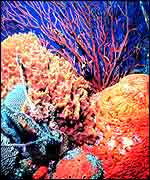
| | Friday, 13 December, 2002, 10:54 GMT Coral reefs start slow recovery  Red Sea coral: Some reefs are slowly improving
But they report the pattern is patchy, with improvements in some areas balanced by continued degradation in others.
They are encouraged by international efforts to arrest and reverse the corals' decline. The scientists give their assessment in The Status Of The Coral Reefs Of The World 2002. It is published by the Global Coral Reef Monitoring Network (GCRMN) in partnership with IUCN - The World Conservation Union. Carl Gustaf Lundin, head of the IUCN marine programme, said: "Thanks to increased international commitment to address the causes of coral degradation, such as dynamite fishing and sedimentation, some reef systems around the world are slowly recovering. "But it is clear that our attempts at managing reefs to prevent their decline are still lagging behind the increasing rate of reef degradation. Continued attrition "There is a need to tackle two parallel agendas: the losses in coral reefs at local scales around the world from the direct impacts of people, such as over-fishing, pollution and sedimentation; and the truly global threats posed by climate change."
In 2002, it says, more than 400 reefs underwent bleaching, a process in which corals lose their distinctive colour and acquire a bleached white appearance. Triggers include environmental stresses like extreme temperature or light, low salinity and various toxins. IUCN says: "Reefs in eastern Africa and the Indian Ocean continue to degrade because of sediment and nutrient runoff and over-exploitation of reef resources. Global effort "In Australia and Papua New Guinea - where 60% of the Great Barrier Reef was bleached in 2002, with some inshore reefs suffering up to 90% coral death - most reefs remain predominantly healthy due to low human pressures and effective management and monitoring." The report was written by Dr Clive Wilkinson, an Australian marine scientist.
"The latest report shows there has been recovery, but it is in areas that are quarantined from other activity. That is largely due to the influence of the international community in recent years. "The US has put a lot of money into its coral reef task force. Sweden has been funding monitoring and research in east Africa, south-east Asia and the Indian Ocean; France has also been active. Crucial year "I am heartened by the recovery but apprehensive for the future. A large proportion of the stocks of big, old corals which facilitate fish productivity, have been lost. "This season will be telling. A collapse in the monsoon, an absence of trade winds and the clear skies associated with another El Nino will weaken corals. "Put an infusion of fresh water from a possible cyclone on top of that and you have trouble." Research published in February 2002, funded by Conservation International, said 25% of the world's reefs had already been destroyed or badly damaged by problems arising from climate change. The researchers said 58% of reefs were reported to be threatened by human activities. Images copyright and courtesy of US National Oceanic and Atmospheric Administration | | See also:  15 May 02 | Science/Nature 28 Mar 02 | Science/Nature 26 Feb 02 | Science/Nature 14 Feb 02 | Boston 2002 Internet links: The BBC is not responsible for the content of external internet sites Top Science/Nature stories now: Links to more Science/Nature stories are at the foot of the page. | ||||||||||||||||||||||||||||||||||||||||||||||||||||||||||||||||||||||||||||||||||||||||||||||||||||||||||||||||||||||||||||||||||||||||||||||||
| |
|  E-mail this story to a friend E-mail this story to a friend |
| |
| Links to more Science/Nature stories |
| | | ||
 | ||||
 | | Back to top
| ||
| ---------------------------------------------------------------------------------- To BBC Sport>> | To BBC Weather>> | To BBC World Service>> ---------------------------------------------------------------------------------- © MMIII | News Sources | Privacy |






 I am heartened by the recovery but apprehensive for the future