|
 |
 | | | | | | |||||||||||||||||||||||||||||||||||||||||||||||||||||||||||||||||||||||||||||||||||||||||||||||||||||||||||||||||||||||||||||||||||||||||||||||||||||||||||||||||||||||||||||||||
| | | You are in: Science/Nature | |||||||||||||||||||||||||||||||||||||||||||||||||||||||||||||||||||||||||||||||||||||||||||||||||||||||||||||||||||||||||||||||||||||||||||||||||||||||||||||||||||||||||||||||||||
|
| | Tuesday, 10 December, 2002, 09:58 GMT Bolivian glaciers shrinking fast 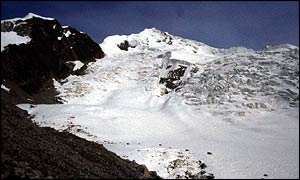 Huayna Potosi: The cities below depend on the meltwaters
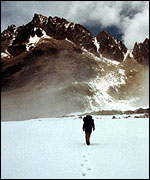
If rising temperatures and low precipitation continue, many smaller glaciers will vanish in a decade, the researchers believe. Further ahead, the consequence could be water and power shortages for millions of Bolivians. Dangerous work Alvaro Soruco led the way across the Zongo glacier, cautiously poking the ground before him in search of deadly fissures that plummet deep into the dark heart of this slowly moving mass of ice.
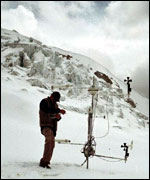
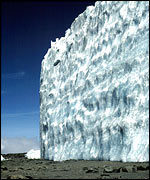
Lines could be made out on the ice wall - fractures, Alvaro informed me, which one day would be the starting point of an avalanche. All around us on the snow were small insects, blown up in a cloud from their tropical Amazon home and dropped on to this white carpet to take their last confused steps. And echoing up from far below came the distant gurgle of running water. Data collection Crossing this glacier is a weekly event for Alvaro, a 22-year-old student working with the French Institut de Recherche pour le Developpement (IRD). From a measuring station located 5,200 m above sea level, he records data showing precipitation, wind speed, air temperature and other variables that help the team from the IRD map the changing form of the glacier. For a decade now, in fair and foul weather, the team has been collecting data on this and two other glaciers in the Cordillera Real mountain range, which curves around La Paz and off north towards Peru. The results have been alarming. Losing mass The Zongo glacier has retreated by around 10 metres and lost about one metre of depth every year.
The key factor accelerating mass loss on these glaciers is increasingly frequent El Nino events in this part of the world, a climate phenomenon that may or may not be being pumped up by global warming. "This is a problem for the glaciers because it means lower precipitation and higher temperatures," explained Dr Robert Gallaire, head of the La Paz IRD unit. Glaciers are shrinking all over the planet. But tropical glaciers, most of which are in the Andes, are losing ground fastest. Tropical glaciers These low-latitude high-altitude glaciers are particularly sensitive to changes in climate because their season of accumulation is summer, when radiation levels are at their peak. In Europe or elsewhere, glaciers accumulate during the cold season, allowing some recovery. In the Andes, the run-off goes on all year, leaving smaller glaciers, like Chacaltaya, exposed. "Chacaltaya no longer has enough inertia," said Dr Gallaire. "The bare rock around the glacier works as an oven, speeding the melting. Even in 2000/1 when we had a strong La Nina year with a lot of snowfall, it continued to lose mass." Important water source Run-off from glaciers in the Cordillera Real contributes to reservoirs that supply 1.5 million people in La Paz and the neighboring city El Alto. It also feeds a series of hydroelectric plants that satisfy the two cities' energy needs. If current warming trends continue, Dr Gallaire fears that within 50 years the loss of glaciers will impact heavily on these water supplies. Robert Bianchi, general manager at the La Paz water company, Aguas del Illimani, is not so worried.
"To project the problem of water for La Paz and El Alto in 50 years is the work of an artist," he says. "If it is a problem that will affect the next generation it will be a problem for the next concessionaire who takes over in 2027." Oscar Paz, who heads up Bolivia's climate change office, hopes the world's most powerful nations will not leave their response to a changing climate to the next generation of politicians. "The most vulnerable countries like Bolivia, who don't have resources to face these problems, are those that will feel the impact of climate change most strongly," he said. "We need developed nations to act now to control carbon emissions, but also to support us financially as we try to adapt." | |
See also:  18 Oct 02 | Science/Nature 18 Jul 02 | Science/Nature 17 Feb 02 | Boston 2002 22 Nov 00 | Science/Nature Internet links: The BBC is not responsible for the content of external internet sites Top Science/Nature stories now: Links to more Science/Nature stories are at the foot of the page. | |||||||||||||||||||||||||||||||||||||||||||||||||||||||||||||||||||||||||||||||||||||||||||||||||||||||||||||||||||||||||||||||||||||||||||||||||||||||||||||||||||||||||||||||||
| |
|  E-mail this story to a friend E-mail this story to a friend |
| |
| Links to more Science/Nature stories |
| | | ||
 | ||||
 | | Back to top
| ||
| ---------------------------------------------------------------------------------- To BBC Sport>> | To BBC Weather>> | To BBC World Service>> ---------------------------------------------------------------------------------- © MMIII | News Sources | Privacy |






 The bare rock around the glacier works as an oven, speeding the melting