|
 |
 | | | | | | |||||||||||||||||||||||||||||||||||||||||||||||||||||||||||||||||||||||||||||||||||||||||||||||||||||||||||||||||||||||||||||||||||||||||||||||||
| | | You are in: Science/Nature | |||||||||||||||||||||||||||||||||||||||||||||||||||||||||||||||||||||||||||||||||||||||||||||||||||||||||||||||||||||||||||||||||||||||||||||||||||
|
| | Thursday, 28 November, 2002, 08:48 GMT Soil's secrets to be unearthed 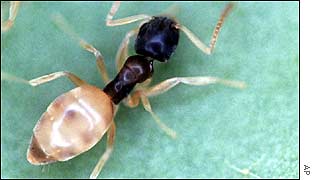 Florida ghost ant: The project will study tropical soil life
It hopes its work will help to improve the level of soil nutrients and increase farmers' harvests.
The team's work is possible only because of the development of new technology. It is being funded by the United Nations Environment Programme (Unep) and the Global Environment Facility (Gef). Profitable bacteria The scientists will work in India, Indonesia, Kenya, Uganda, Ivory Coast, Mexico and Brazil. Unep says the key to the scheme, the Conservation and Sustainable Management of Below-ground Biodiversity project, is the role of soil organisms as suppliers of nutrients.
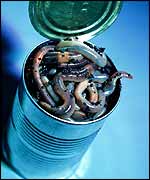
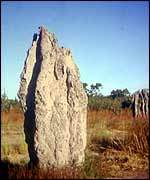
In tea plantations in the Indian state of Tamil Nadu the reintroduction of earthworms has boosted harvests by almost 300%, while in Brazil it is bacteria that have achieved a turn-round. Dr Fatima Moreira, a Brazilian soil microbiologist, said: "Soya beans have been inoculated with a species of nitrogen-fixing bacteria called Bradyrhizobium, and this has totally replaced the use of industrial fertilisers. "An area of Brazil covering 14m hectares [35m acres] is being farmed this way. This new technique is saving the national economy about US $1bn a year." Improved technology Besides termites, worms and bacteria, the scientists will be examining the role of fungi, protozoa, nematodes, mites and ants. The project is being coordinated by the Tropical Soil Biology and Fertility Institute in Nairobi, Kenya. Its director, Professor Mike Swift, said: "One of the reasons why below-ground biodiversity has been the Cinderella subject of the natural world has been linked to the difficulty of actually seeing what is there. "But we now have new genetic or DNA screening techniques, similar to those used by forensic scientists to profile a criminal from a swab or sample, which will allow us to screen soil samples for bacteria, fungi and other life forms." Professor Swift said there was evidence that the planting of single crops led to a sharp decline in the level of sub-surface species, adversely affecting yields, moisture content, pest control and fertility. Clean-up squad He said: "The natural ability of the soil to break down pollutants also appears to be compromised... A major aim of the project is to determine the optimum trade-off between biological and industrial approaches to management of the soil." The scientists will also be researching the ability of burrowing organisms to influence the amount of rainwater soils can absorb. This has implications for drought- and flood-prone areas, and for erosion.
And there are hopes of finding new species which could be a potent genetic resource, the raw material of industrial products and drugs, including antibiotics. Dick Thompson of the UK's National Soil Resources Institute told BBC News Online: "This is a very sensible allocation of funds. "But why can't we have some more funding for soil biology in temperate soils, especially in Europe and the UK? "We largely ignore the living world beneath our feet, although our very existence depends on it." | | See also:  16 Aug 02 | Health 21 Oct 00 | Science/Nature 22 May 00 | Science/Nature 10 Jan 00 | Science/Nature Internet links: The BBC is not responsible for the content of external internet sites Top Science/Nature stories now: Links to more Science/Nature stories are at the foot of the page. | |||||||||||||||||||||||||||||||||||||||||||||||||||||||||||||||||||||||||||||||||||||||||||||||||||||||||||||||||||||||||||||||||||||||||||||||||
| |
|  E-mail this story to a friend E-mail this story to a friend |
| |
| Links to more Science/Nature stories |
| | | ||
 | ||||
 | | Back to top
| ||
| ---------------------------------------------------------------------------------- To BBC Sport>> | To BBC Weather>> | To BBC World Service>> ---------------------------------------------------------------------------------- © MMIII | News Sources | Privacy |