|
 |
 | | | | | | ||||||||||||||||||||||||||||||||||||||||||||||||||||||||||||||||||||||||||||||||||||||||||||||||||||||||||||||||||||||||||||||||||||||||||||||||||||||||||||||||||||||||||||
| | | You are in: Science/Nature | ||||||||||||||||||||||||||||||||||||||||||||||||||||||||||||||||||||||||||||||||||||||||||||||||||||||||||||||||||||||||||||||||||||||||||||||||||||||||||||||||||||||||||||||
|
| | Tuesday, 19 November, 2002, 11:57 GMT Meteor shower hidden by cloud 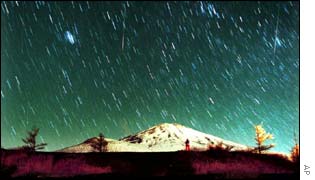 Leonids spotted above Mount Fuji, Japan Cloud, fog and mist across Europe hampered the view of the Leonid meteor shower, which peaked in the early hours of Tuesday, GMT. This year's shower was expected to be one of the most spectacular to be seen over the next 30 years, but bad weather left many skywatchers disappointed. The "shooting stars" may still be seen in the Unites States - where the peak of the shower starts at 1030 GMT. If there had been clear skies, astronomers predicted seeing up to a 1,000 meteors an hour. Grains of rice The shooting stars are actually particles from Comet Tempel-Tuttle, which has a 33-year orbit around the Sun. As the Earth passes through the cloud of dust left by the comet, these particles burn up in the atmosphere, creating the light streaks. Most of the meteors are no bigger than a grain of rice. They enter the Earth's atmosphere at speeds of 65 kilometres per second (40 miles per second). Spoilt view In some European countries the view was hampered by thick fog. Some weather reports said visibility was down to less than 50 metres. In North America, the burst started at 1030 GMT (0530 EST or 0230 PST). Bille Cooke, a meteor forecaster from the US space agency's (Nasa) Marshall Space Flight Center, said: "Try and get away from city lights; the darker the sky, the more meteors you'll see." There is no guarantee that the shower will appear on cue. But for those who miss the shower, it will be possible to view it online on Nasa TV. | |
See also:  30 Nov 98 | The Leonids 98 08 Nov 99 | Science/Nature 15 Nov 99 | Science/Nature 18 Nov 01 | Science/Nature 13 Aug 02 | Science/Nature Internet links: The BBC is not responsible for the content of external internet sites Top Science/Nature stories now: Links to more Science/Nature stories are at the foot of the page. | ||||||||||||||||||||||||||||||||||||||||||||||||||||||||||||||||||||||||||||||||||||||||||||||||||||||||||||||||||||||||||||||||||||||||||||||||||||||||||||||||||||||||||||
| |
|  E-mail this story to a friend E-mail this story to a friend |
| |
| Links to more Science/Nature stories |
| | | ||
 | ||||
 | | Back to top
| ||
| ---------------------------------------------------------------------------------- To BBC Sport>> | To BBC Weather>> | To BBC World Service>> ---------------------------------------------------------------------------------- © MMIII | News Sources | Privacy |