|
 |
 | | | | | | |||||||||||||||||||||||||||||||||||||||||||||||||||||||||||||||||||||||||||||||||||||||||||||||||||||||||||||||||||||||||||||||||||||
| | | You are in: Science/Nature | |||||||||||||||||||||||||||||||||||||||||||||||||||||||||||||||||||||||||||||||||||||||||||||||||||||||||||||||||||||||||||||||||||||||
|
| | Tuesday, 19 November, 2002, 05:02 GMT Africa's wetlands need better protection 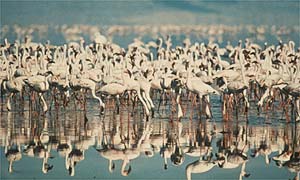 Lesser flamingos feeding on wetlands Eighty-six percent of Africa's most important wetland bird sites lack adequate international protection, according to a new report. Published by the conservation group BirdLife International, the report identifies 586 Important Bird Areas (IBAs) that require their status to be raised. The sites are not only home to birds and other wildlife, they also support many local communities who rely on the wetlands for fishing and hunting and for supplies of clean water. The report recommends these wetlands should become so-called Ramsar sites as soon as possible to open the way for sustainable management of the areas. Environmental agreement The Ramsar convention on wetlands was one of the first major international conservation agreements and was set up in 1971. It offers protection to important wetland sites and ensures they are looked after in a way that supports local communities and meets the needs of wildlife. The total area currently protected under the convention is 105.9 million hectares. Delegates to the current Ramsar convention meeting in Spain are discussing the Birdlife report. A further 586 IBAs have now been identified - some covering areas of more than 50 square kilometres - which BirdLife says should receive Ramsar status. Water purification The wetlands are home to many types of bird. Some, like swallows and sand martins, will fly from temperate zones to spend the winter on Africa's wetlands.
Julius Arinaitwe, an environmental manager at Birdlife International's Africa division, told BBC News Online that these areas were important for cultivation and agriculture. He said: "During the dry season everyone goes to the wetlands for water and to graze their animals." The wetlands also act as giant water purifiers. Rivers that flow through them are naturally cleaned, supplying fresh water to communities living nearby. They also prevent floods and act as water reservoirs, replenishing underground aquifers needed in drier months. Daniel Siaffa, the head of the Conservation Society of Sierra Leone, said: "Conserving these sites is important because of the global significance of the waterbird biodiversity they support and their crucial role in the protection of water which is a key resource required for human survival and development." Agricultural growth, human disturbance, hunting, fishing, industrialisation and urbanisation are the biggest threats to wetlands in Africa. Nearly all countries in Africa have at least one such site, with particularly high numbers found in Madagascar, South Africa, Tanzania and Tunisia. | | See also:  09 Apr 01 | Asia-Pacific 17 Jun 02 | England 16 Aug 00 | Americas Top Science/Nature stories now: Links to more Science/Nature stories are at the foot of the page. | |||||||||||||||||||||||||||||||||||||||||||||||||||||||||||||||||||||||||||||||||||||||||||||||||||||||||||||||||||||||||||||||||||||
| |
|  E-mail this story to a friend E-mail this story to a friend |
| |
| Links to more Science/Nature stories |
| | | ||
 | ||||
 | | Back to top
| ||
| ---------------------------------------------------------------------------------- To BBC Sport>> | To BBC Weather>> | To BBC World Service>> ---------------------------------------------------------------------------------- © MMIII | News Sources | Privacy |