|
 |
 | | | | | | |||||||||||||||||||||||||||||||||||||||||||||||||||||||||||||||||||||||||||||||||||||||||||||||||||||||||||||||||||||||||||||||||||||||||||||||||
| | | You are in: Science/Nature | |||||||||||||||||||||||||||||||||||||||||||||||||||||||||||||||||||||||||||||||||||||||||||||||||||||||||||||||||||||||||||||||||||||||||||||||||||
|
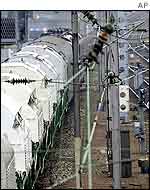
| | Thursday, 21 November, 2002, 02:16 GMT Kazakhstan eyes EU N-waste 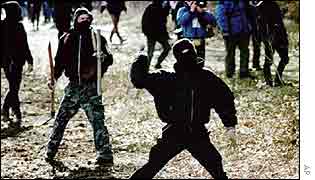 Nuclear wastes excite passions, as here in Germany
It hopes to earn enough from the trade to pay for the disposal of its own waste stockpile. But it has no depository able to accept any waste consignments from abroad. And it appears ready to flout international regulations on nuclear waste treatment.
The company responsible for running the import programme, assuming it is approved, is Kazatomprom, the national nuclear company. Its president, Mukhtar Dzakishev, says cleaning up the country's own nuclear waste mountain of more than 220 million tonnes will cost $1.1bn, a sum Kazakhstan says it cannot afford. He believes importing waste could earn Kazakhstan $30-40bn over the next 30 years. Risk refuted Mr Dzakishev said: "We will charge $5,000 per 200-litre barrel of waste, giving us a profit of $4,000.
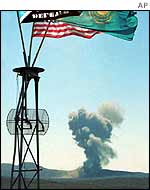
"None of the wastes will contain plutonium, and we can bury them temporarily in shallow pits, old uranium mines, until a depository is built for them at Aktau on the Caspian." Nirex, the UK's nuclear waste disposal company, says intermediate waste may include spent reactor fuel which contains plutonium. That has a half-life of 200,000 years, and in the UK any such waste must be buried in deep depositories. The main Soviet nuclear test site during the Cold War was in Kazakhstan, at Semipalatinsk. Nearly five-hundred nuclear bombs were detonated at Semipalatinsk, the world's biggest nuclear testing ground, during its working life, and the Kazakh Government estimates that more than a million people were exposed to radiation as a result. Many people living near the site suffered birth defects or cancers because of the tests, although they were not told what was happening at the site. International controls claim Semipalatinsk, which was so secret that it did not even appear on maps of Kazakhstan, was closed in 2000. Mr Dzhakishev said cancer rates in Kazakhstan had risen by 8.3% in the last five years.
"Then we shall be able to announce we have sites conforming to international standards for these categories of waste. "The trade will be controlled by the International Atomic Energy Agency (IAEA). The imports could start within a year of the parliamentary vote." Russian rival The IAEA, which is based in Vienna, said it had discussed the issue of importation with the Kazakh Government, but added: "It cannot be said that the IAEA has encouraged Kazakhstan to pursue importing radioactive waste." The role at the IAEA was to explain the international safety regime and the requirements for disposal, the agency said. Professor Alexei Yablokov is a member of the Russian Academy of Sciences, and president of his country's Centre for Environmental Policy. He said he thought Kazakhstan's neighbours would refuse to allow waste imports to cross their territory. He said: "It's a big problem. You will look in the eyes of the entire world not only eccentric, but half-witted." Last year, the Russian president, Vladimir Putin, signed a controversial law on nuclear imports, paving the way for thousands of tonnes of spent fuel to enter Russia. But Kazakhstan hopes to beat him to it. | | See also:  11 Jul 01 | Europe 29 Jul 00 | Asia-Pacific 13 Nov 02 | Europe Top Science/Nature stories now: Links to more Science/Nature stories are at the foot of the page. | |||||||||||||||||||||||||||||||||||||||||||||||||||||||||||||||||||||||||||||||||||||||||||||||||||||||||||||||||||||||||||||||||||||||||||||||||
| |
|  E-mail this story to a friend E-mail this story to a friend |
| |
| Links to more Science/Nature stories |
| | | ||
 | ||||
 | | Back to top
| ||
| ---------------------------------------------------------------------------------- To BBC Sport>> | To BBC Weather>> | To BBC World Service>> ---------------------------------------------------------------------------------- © MMIII | News Sources | Privacy |