|
 |
 | | | | | | ||||||||||||||||||||||||||||||||||||||||||||||||||||||||||||||||||||||||||||||||||||||||||||||||||||||||||||||||||||||||||||||||||||||||||||||||||||||||||||||||||||||||||||||||||
| | | You are in: Science/Nature | ||||||||||||||||||||||||||||||||||||||||||||||||||||||||||||||||||||||||||||||||||||||||||||||||||||||||||||||||||||||||||||||||||||||||||||||||||||||||||||||||||||||||||||||||||||
|
| | Friday, 15 November, 2002, 13:01 GMT Impact 'showered debris over Britain' 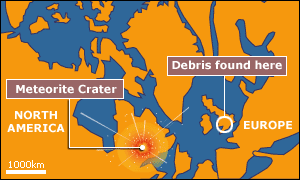 The world looked very different 214 million years ago
Rock blasted out of the ground by an asteroid hitting the Earth has been found for the first time in the southwest of England.
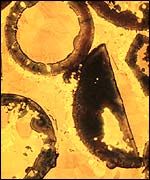
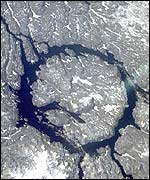
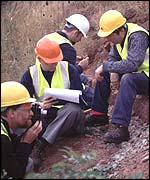
The space rock hit what is now Manicouagan, Quebec, opening up a 100-kilometre-wide (62-mile-wide) crater that can be seen by astronauts from space. The Atlantic Ocean had not appeared at the time, so the two land masses (Europe and North America) were much closer than they are today. The rock was found near Bristol by geologists at the University of Aberdeen. Dr Gordon Walkden said: "We have found evidence of a massive shockwave carrying molten rock and dust that has left a thin layer of glass beads and shattered mineral grains across the ancient British land surface." Nuclear bomb The material has the distinctive hallmark of an asteroid slamming into the planet. The space body, about five km (three miles) wide, generated a shockwave 40 million times larger than the Hiroshima blast.
The landscape 214 million years ago was very different to the rolling green fields of today. It was largely arid desert, sparsely populated by ferns, reptiles, lizards, and small mammals. "Anything standing would have been flattened by the blast," said Dr Walkden, who discovered the rock in the 1980s. He knew at once there was something unusual about the sample, which he describes as tiny green balls embedded in pinky-coloured rock, but its ancient origins have only just come to light. "It was very clearly something strange that I wasn't able to identify at the time," the senior geology lecturer told BBC News Online. "It sat in a drawer for a long time." It was to be 20 years before he realised its scientific value, when he saw similar deposits from a crater in Mexico, where the asteroid blamed for killing off the dinosaurs landed. Dark skies According to Dr Simon Kelley, of the Open University in Milton Keynes, who dated the Bristol sample, it is the first recorded example of such an impact deposit in Britain.
"First you would have seen a big flash over the horizon. Then the skies would have gone dark; then it would have rained hot dust and rocks. The effects would have lasted for years." The shock wave from the asteroid would have carried molten rock and dust thousands of kilometres. Scientists are now searching for other remnants of the blast to study what happened to biodiversity on Earth. Public display The Canadian impact does not seem to have had as devastating an effect as the impactor that signalled the downfall of the dinosaurs.
"It may well be that we might get devastating meteorite impacts in the future but it is unlikely that there will be a repeat of the impact that saw the end of the dinosaurs," said Dr Kelley. A piece of the material discovered by Dr Walkden will be on display at the Darwin Centre at the Natural History Museum, London, on 15 November. Specimens will also be on display at the National Space Centre in Leicester, the National Museum of Scotland, Edinburgh, and at the University of Aberdeen. The research is published in the journal Science. | |
See also:  01 Aug 02 | Science/Nature 09 Jan 01 | Science/Nature 18 Dec 00 | Science/Nature 11 Jul 00 | Science/Nature 18 Feb 99 | Science/Nature Internet links: The BBC is not responsible for the content of external internet sites Top Science/Nature stories now: Links to more Science/Nature stories are at the foot of the page. | ||||||||||||||||||||||||||||||||||||||||||||||||||||||||||||||||||||||||||||||||||||||||||||||||||||||||||||||||||||||||||||||||||||||||||||||||||||||||||||||||||||||||||||||||||
| |
|  E-mail this story to a friend E-mail this story to a friend |
| |
| Links to more Science/Nature stories |
| | | ||
 | ||||
 | | Back to top
| ||
| ---------------------------------------------------------------------------------- To BBC Sport>> | To BBC Weather>> | To BBC World Service>> ---------------------------------------------------------------------------------- © MMIII | News Sources | Privacy |