|
 |
 | | | | | | |||||||||||||||||||||||||||||||||||||||||||||||||||||||||||||||||||||||||||||||||||||||||||||||||||||||||||||||||||||||||||||||||||||
| | | You are in: Science/Nature | |||||||||||||||||||||||||||||||||||||||||||||||||||||||||||||||||||||||||||||||||||||||||||||||||||||||||||||||||||||||||||||||||||||||
|
| | Friday, 25 October, 2002, 15:31 GMT 16:31 UK Extinction threat to cod 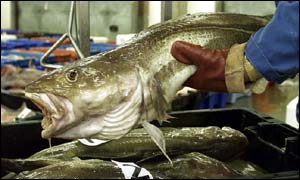 The industry is warning of dire consequences A total ban on cod fishing in the North Sea is being proposed by scientists to protect European fish stocks. BBC News Online looks at the implications. Why is such drastic action deemed necessary? A report by the International Council for the Exploration of the Seas (ICES) says cod in waters around the UK will become extinct unless fishing stops immediately. Scientists from 19 EU member states say stocks are severely depleted after decades of overfishing and a failure to ensure that enough cod of breeding age are protected. The report recommends a total ban on cod fishing in the North Sea, the Irish Sea, waters in the west of Scotland, and in the Skagerrak Sea off the Danish coast. It also calls for a ban on catching haddock, whiting and scampi, as cod are often caught accidentally at the same time. The report states: "Given the very low stock size, the recent poor recruitment and continued high fishing mortality, despite management efforts to promote stock recovery, ICES recommends a closure of all fisheries as a targeted species or by-catch." It will be considered in the coming weeks by the European Commission, which is likely to accept the recommendations to save the cod from extinction. What will it mean for the fishing industry? The report, which was leaked earlier in the week, is grim reading for the fishing industry.
Cod fishing communities have few options left because once a trawler is fitted for cod it cannot be adapted to catch other species, such as mackerel or herring. What effect would a ban have on fish stocks? Cod numbers have fallen below the minimum levels required to sustain healthy stocks for nearly 20 years. This is partly due to the removal of fish that are too young to reproduce. Female adults can lay around four million eggs per season. However, only one in 20 fish survive long enough to spawn. Most cod are caught before they are two years old, and thus are unable to propagate the species. Overfishing has compounded the problem and, by 2001, cod numbers had reached historic lows. It will take many years for stocks to recover because cod can take up to six years to reach maturity. So any ban introduced is likely to be in place for many years to come. | | See also:  25 Oct 02 | Scotland 23 Oct 02 | Europe 01 May 02 | Science/Nature 23 Oct 02 | Scotland 15 Oct 02 | Scotland 28 May 02 | Scotland 28 May 02 | Europe 24 May 02 | UK Internet links: The BBC is not responsible for the content of external internet sites Top Science/Nature stories now: Links to more Science/Nature stories are at the foot of the page. | |||||||||||||||||||||||||||||||||||||||||||||||||||||||||||||||||||||||||||||||||||||||||||||||||||||||||||||||||||||||||||||||||||||
| |
|  E-mail this story to a friend E-mail this story to a friend |
| |
| Links to more Science/Nature stories |
| | | ||
 | ||||
 | | Back to top
| ||
| ---------------------------------------------------------------------------------- To BBC Sport>> | To BBC Weather>> | To BBC World Service>> ---------------------------------------------------------------------------------- © MMIII | News Sources | Privacy |