|
 |
 | | | | | | |||||||||||||||||||||||||||||||||||||||||||||||||||||||||||||||||||||||||||||||||||||||||||||||||||||||||||||||||||||||||||||||||||||||
| | | You are in: Science/Nature | |||||||||||||||||||||||||||||||||||||||||||||||||||||||||||||||||||||||||||||||||||||||||||||||||||||||||||||||||||||||||||||||||||||||||
|
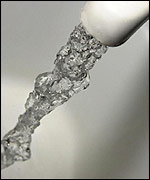
| | Friday, 25 October, 2002, 10:04 GMT 11:04 UK Sunshine used to clean water  The new process is much gentler on the environment A cheap, harmless chemical and sunlight could provide an environmentally friendly way of destroying micro-pollutants in the environment. UK researchers are developing a new type of reactor to destroy persistent contaminants such as pesticides and pharmaceutical residues. The technology, which breaks down the polluting molecules into carbon dioxide and water, could provide a breakthrough for a sustainable way of cleaning up fresh water supplies and industrial wastewater.
The idea is to pump the contaminated water through a specially designed nozzle. Titanium dioxide is then added to the water. The nozzle produces an umbrella-shaped fountain of water, with the sunlight - or artificial ultraviolet light - falling on the "canopy" of the umbrella. This allows the photo-catalyst to absorb the solar radiation efficiently, resulting in a more effective destruction of the pollutants. 'Ecological damage' Dr Li Puma said: "Once the pollutants have been removed, the water can be passed to a settling tank where the titanium dioxide can be recovered and re-used for the same process." The team has successfully demonstrated the feasibility of the concept using a 400-litre pilot plant and ultraviolet lamps to simulate sunlight. "We see this as being a potentially sustainable technology which could have particular use in countries with plenty of sunshine, such as southern Europe, Central and South America, Africa and the Asia Pacific region," said Dr Li Puma. "In the UK, the present technology can use low-cost, low-power sun-tanning lamps." Certain pesticides and other chemicals, such as synthetic and human oestrogens, can persist in the environment. "If these compounds find their way into water courses they can end up in rivers and accumulate in fish, causing ecological damage," said Dr Li Puma.
"Water treatment plants usually use granular activated carbon to "soak up" these molecules. The carbon is then regenerated or disposed of by burning off the offending chemicals. "However, this can itself result in noxious chemicals entering the atmosphere, so the problem changes from one of water pollution to one of atmospheric pollution." The process being tested by the Nottingham researchers is much gentler on the environment. Titanium dioxide is an inexpensive white powder, which is used as pigment in paints and also in health products such as toothpastes and sunscreens. Titanium dioxide is also a powerful "photo-catalyst". It can take energy from sunlight and mediate the splitting of molecules. Dr Li Puma said: "Titanium dioxide can absorb the ultraviolet component of sunlight, causing a change in its internal electron configuration. Lagoon "In this form it can split water into highly reactive components called free radicals." One of these, the OH radical, readily reacts with large carbon-based molecules, such as pesticides, converting them into carbon dioxide and water. The fountain photo-catalytic reactor can be easily installed in current water treatment works by the simple distribution of these nozzles in an open-air, sunlight-activated lagoon treatment plant. In addition, the fountain photo-reactor has the potential to combine water disinfection and water detoxification in a single process. The researchers are also investigating whether a similar technique could be used to disinfect water from wells, for example. The project is funded by the Swindon based Engineering and Physical Sciences Research Council (EPSRC). | | See also:  24 Jul 02 | UK 04 Apr 02 | England 02 Oct 02 | Science/Nature 12 Aug 02 | Science/Nature Internet links: The BBC is not responsible for the content of external internet sites Top Science/Nature stories now: Links to more Science/Nature stories are at the foot of the page. | |||||||||||||||||||||||||||||||||||||||||||||||||||||||||||||||||||||||||||||||||||||||||||||||||||||||||||||||||||||||||||||||||||||||
| |
|  E-mail this story to a friend E-mail this story to a friend |
| |
| Links to more Science/Nature stories |
| | | ||
 | ||||
 | | Back to top
| ||
| ---------------------------------------------------------------------------------- To BBC Sport>> | To BBC Weather>> | To BBC World Service>> ---------------------------------------------------------------------------------- © MMIII | News Sources | Privacy |