|
 |
 | | | | | | ||||||||||||||||||||||||||||||||||||||||||||||||||||||||||||||||||||||||||||||||||||||||||||||||||||||||||||||||||||||||||||||||||||||||||||||
| | | You are in: Science/Nature | ||||||||||||||||||||||||||||||||||||||||||||||||||||||||||||||||||||||||||||||||||||||||||||||||||||||||||||||||||||||||||||||||||||||||||||||||
|
| | Wednesday, 18 September, 2002, 22:06 GMT 23:06 UK Sahara desert frontiers turn green  This is a thing of a past in many parts of West Africa
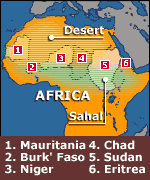
Satellite pictures of northern Africa show that areas lost to the Sahara desert during decades of drought are turning green again. Analysis of images show deserts retreating in a broad band stretching from Mauritania to Eritrea, according to research in British magazine New Scientist. The driving force behind the retreat of the deserts is believed to be increased rainfall. Better farming methods have also played a critical role, according to researchers.
Twenty years ago, severe droughts turned much of northern Burkina Faso into a desert. But satellite surveys of the region have shown that vegetation is returning to the country - and, indeed, across the southern edge of the Sahara desert. Reclaiming farmland The surveys were funded by Dutch, German and American aid agencies, and will be presented to ministers in Burkina Faso later this year. And new comparisons with archived images also show increasing grassland and forest vegetation in southern Mauritania, north-western Niger, central Chad, as well as in Sudan and parts of Eritrea. And the researchers say that while overall improvements have been steady, dramatic progress has been made in particular villages and areas, particularly those where donor agencies have invested consistently in soil and water conservation. One particularly successful farming technique is known as "contour bunding". It consists in placing lines of stones along slopes and contours on the land to help rainfall soak in, and to stop topsoil washing away. And that is helping to transform thousands of hectares into productive fields - where nothing grew just a decade ago. | | See also:  17 Jun 01 | Science/Nature 18 Nov 99 | Science/Nature 12 Jul 99 | Science/Nature 30 Nov 98 | Africa Internet links: The BBC is not responsible for the content of external internet sites Top Science/Nature stories now: Links to more Science/Nature stories are at the foot of the page. | ||||||||||||||||||||||||||||||||||||||||||||||||||||||||||||||||||||||||||||||||||||||||||||||||||||||||||||||||||||||||||||||||||||||||||||||
| |
|  E-mail this story to a friend E-mail this story to a friend |
| |
| Links to more Science/Nature stories |
| | | ||
 | ||||
 | | Back to top
| ||
| ---------------------------------------------------------------------------------- To BBC Sport>> | To BBC Weather>> | To BBC World Service>> ---------------------------------------------------------------------------------- © MMIII | News Sources | Privacy |