
|
 |
 | | | | | | ||||||||||||||||||||||||||||||||||||||||||||||||||||||||||||||||||||||||||||||||||||||||||||||||||||||||||||||||||||||||||||||||||||||
| | | You are in: Science/Nature | ||||||||||||||||||||||||||||||||||||||||||||||||||||||||||||||||||||||||||||||||||||||||||||||||||||||||||||||||||||||||||||||||||||||||
|
| | Thursday, 29 August, 2002, 12:09 GMT 13:09 UK Farming threat to sparrow 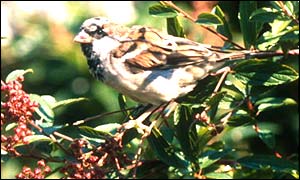 The house sparrow (Passer domesticus) is in decline There is more bad news for the survival of one of Britain's best loved birds, the house sparrow. Conservationists say the bird's future looks grim because the birds cannot get enough food to survive the winter.
Changes in farming methods are thought to be to blame. Planting crops like wheat and barley in autumn rather than spring deprives the birds of winter food. Farmland birds used to feed on the stubble left in the fields between the old summer harvest and spring. Better grain storage, which keeps seeds out of reach, is also contributing to their winter famine. Bleak winter Grahame Madge of the Royal Society for the Protection of Birds (RSPB) says the research helps conservationists understand why sparrows have been declining in some parts of the country but not others. He says sparrows are unusual in that they will not fly more than about a kilometre or so from their nesting site. So once they disappear from an area, they do not repopulate. "It's important for farms and villages to hold on to them," he told BBC News Online. "If they lose their sparrows, they're unlikely to get them back." Rural policy The work, by David Hole and colleagues, could influence conservation policy for farmland birds. Writing in the journal Nature, they say providing extra food in winter halted the loss of sparrows at one Oxfordshire farm where numbers had declined by 80% in the past 30 years. However, this measure does not always work. It had no effect on sparrows at three other farms. | | See also:  01 Aug 02 | Politics 01 Aug 02 | Breakfast 18 Jun 02 | England Internet links: The BBC is not responsible for the content of external internet sites Top Science/Nature stories now: Links to more Science/Nature stories are at the foot of the page. | ||||||||||||||||||||||||||||||||||||||||||||||||||||||||||||||||||||||||||||||||||||||||||||||||||||||||||||||||||||||||||||||||||||||
| |
|  E-mail this story to a friend E-mail this story to a friend |
| |
| Links to more Science/Nature stories |
| | | ||
 | ||||
 | | Back to top
| ||
| ---------------------------------------------------------------------------------- To BBC Sport>> | To BBC Weather>> | To BBC World Service>> ---------------------------------------------------------------------------------- © MMIII | News Sources | Privacy |





